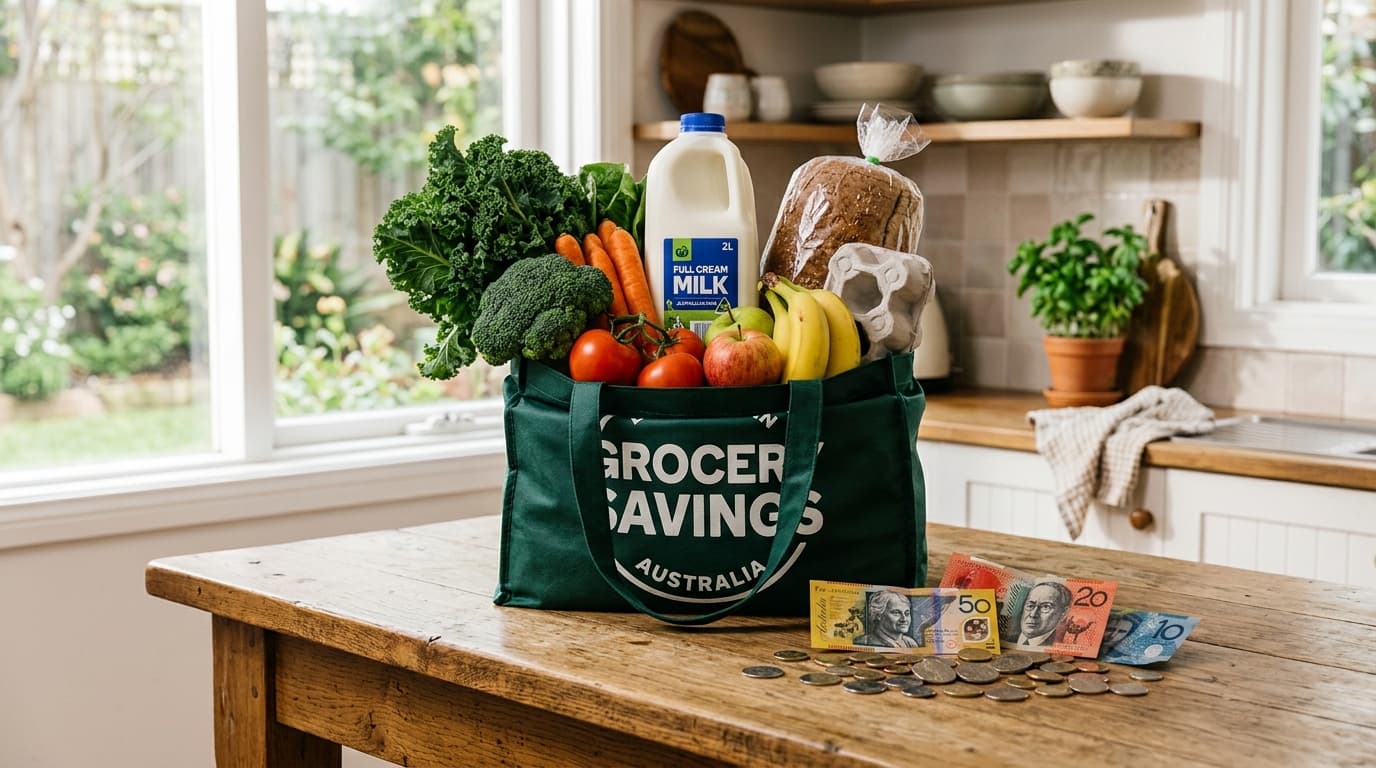
Grocery prices in Australia have climbed steadily over the past few years, and if you are feeling the pinch every time you fill your trolley, you are not alone. The average Australian household now spends between $300 and $400 per week on groceries — that is upwards of $20,000 a year just on food and household essentials.
But here is the good news: with the right strategies, you can realistically cut that bill by 30-40%. We are talking about saving $90 to $160 every week without eating less, switching to inferior products, or spending hours clipping coupons.
One of our readers, Sarah from Melbourne, put it perfectly: "We saved $87 in one week using these strategies — and honestly, the only thing that changed was how we planned our shop. We ate just as well, if not better."
In this guide, we have compiled 25 practical, proven tips that real Australian families use to slash their grocery bills. Whether you shop at Coles, Woolworths, Aldi, or a combination of all three, these tips will help you keep more money in your pocket.
INFOGRAPHIC
Average Australian Grocery Spend by Category
Where your $300/week grocery budget actually goes
Shop Smarter (Tips 1-4)
Before you even set foot in a supermarket, the biggest savings happen at your kitchen table. These four foundational habits can save you $30-$50 per week on their own — and they take less than 30 minutes of planning.
Tip 1: Make a Weekly Meal Plan
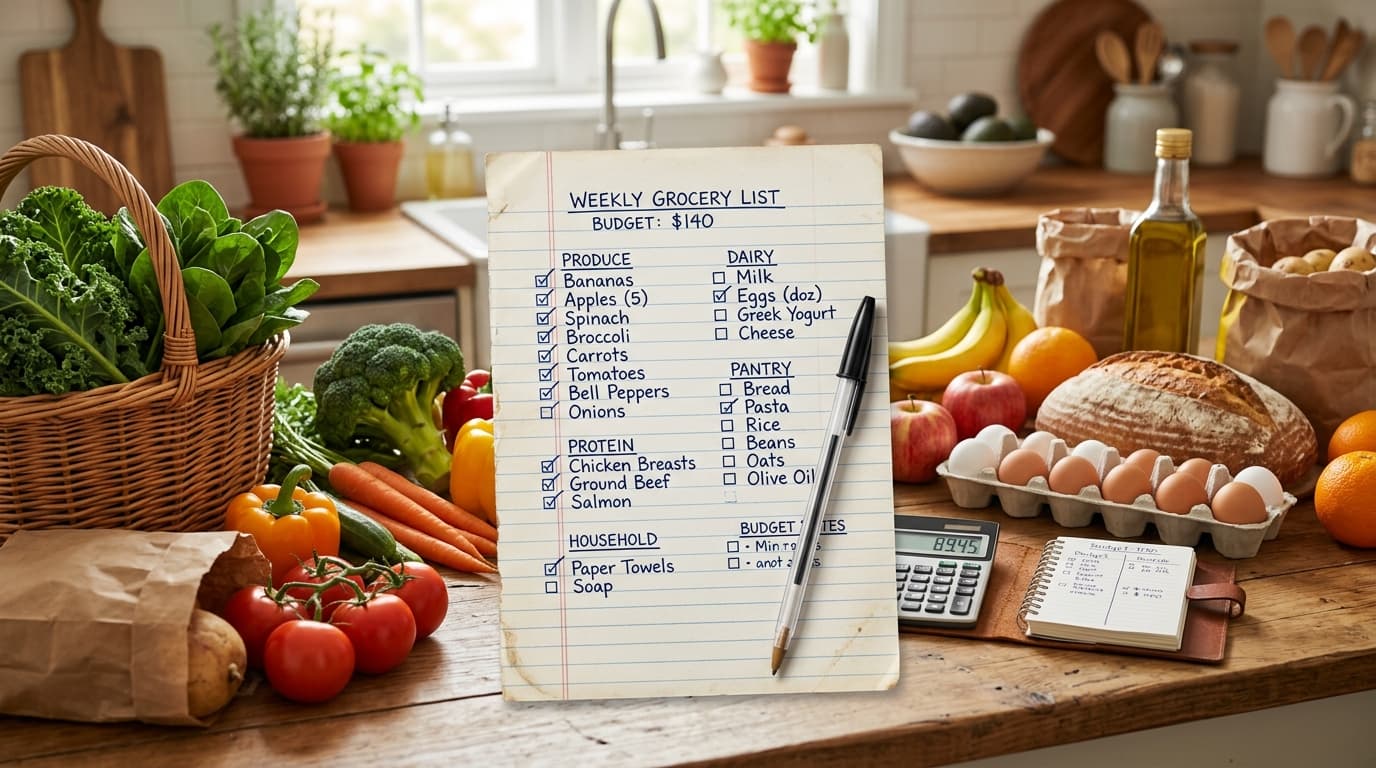
Meal planning is the single most effective way to reduce your grocery bill. When you know exactly what you are going to eat for the week, you buy only what you need — no more, no less. This eliminates the two biggest budget killers: impulse purchases and food waste.
Start simple. On Sunday evening, plan your dinners for the week. Check what is already in your fridge, freezer, and pantry. Then, build your meal plan around what is on special — check the Milk n Eggs specials feed to see what is discounted this week at Coles, Woolworths, and Aldi.
For example, if chicken breast is half price at Woolworths this week, plan two or three chicken-based meals. If tinned tomatoes are on special at Coles, add a pasta bake and a chilli con carne to your plan. This approach alone can save you $20-$30 per week because you are basing your meals around the cheapest ingredients available right now.
Tip 2: Write a Shopping List and Stick to It
It sounds basic, but research from the Australian Institute of Food Safety shows that shoppers without a list spend an average of 23% more than those with one. That is roughly $70 extra per week for the average family — money spent on things you did not need and probably will not use.
Write your list based on your meal plan. Organise it by aisle if you can (produce, dairy, meat, pantry) — this keeps you moving through the store efficiently and reduces the temptation to browse. Use a notes app on your phone so you always have it with you, and tick items off as you go.
The golden rule: if it is not on the list, it does not go in the trolley. The only exception? An incredible special on something you genuinely use regularly. If Tim Tams are half price and you eat them every week, grab a couple of packs. But that "limited edition" sauce you have never tried? Leave it on the shelf.
Tip 3: Shop on Wednesday When New Specials Drop
Both Coles and Woolworths launch their new weekly specials on Wednesday. This is the single best day to shop because you get first pick of all the half-price deals before popular items sell out. By Friday or Saturday, the best specials — particularly fresh meat and popular branded items — are often gone.
The smart play is to check the specials on Tuesday night (they are usually published online the evening before), plan your meals around the best deals, and hit the shops on Wednesday morning. Use the Coles vs Woolworths comparison tool to see which store has the better deals this week — sometimes it is worth splitting your shop between two stores if the savings are significant.
Tip 4: Never Shop Hungry
This tip gets repeated so often because it genuinely works. Shopping on an empty stomach triggers impulse purchases — your brain literally craves high-calorie, high-reward foods when your blood sugar is low. A study from Cornell University found that hungry shoppers buy 31% more high-calorie items and spend significantly more overall.
Have a decent meal or snack before you head to the shops. Even a banana and a handful of nuts can make the difference between a disciplined shop and a trolley full of "but it looked good at the time" items. It is a tiny habit that pays off every single week.
Use Price Tracking Tools (Tips 5-7)
Technology has made it easier than ever to find the best deals without physically visiting multiple stores. These tools can save you $20-$40 per week by ensuring you never overpay for anything.
Tip 5: Use Milk n Eggs to Track Specials
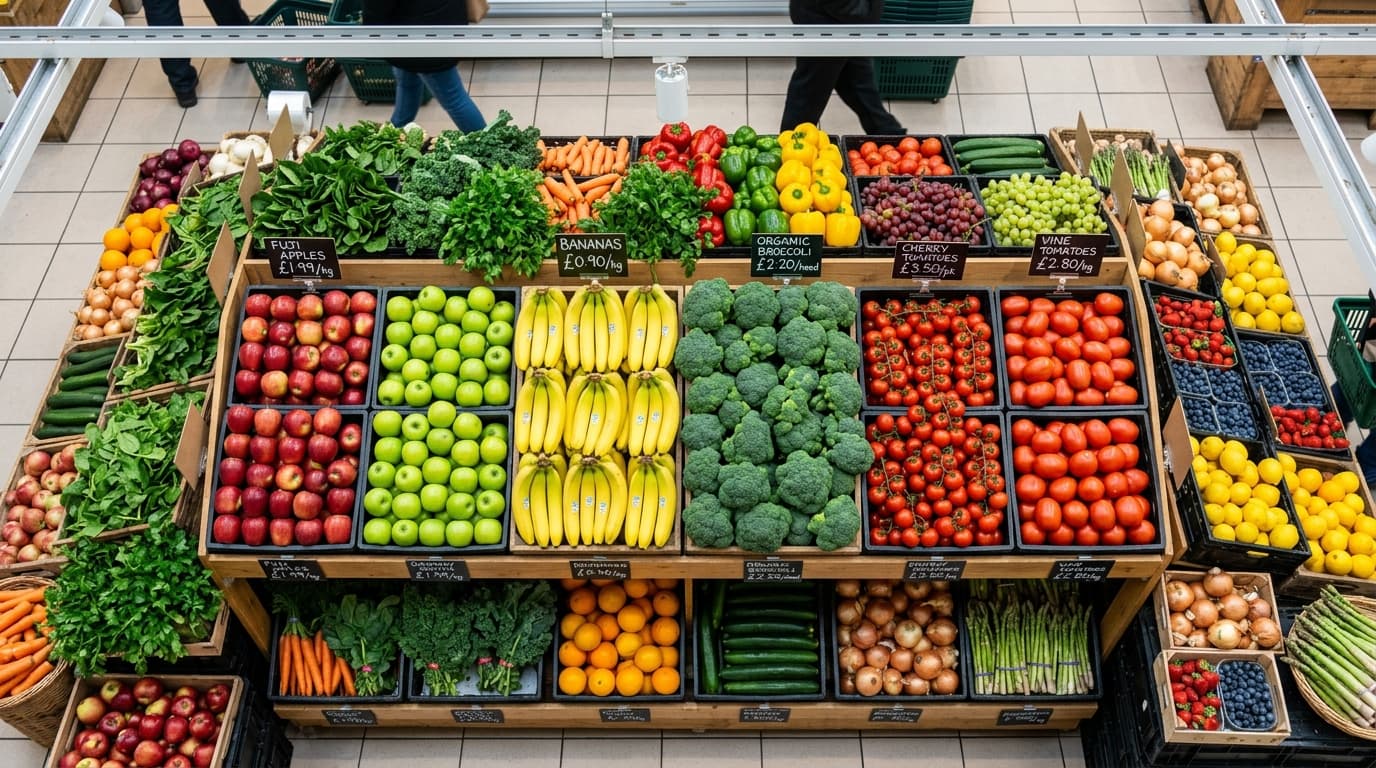
Milk n Eggs aggregates specials from Coles, Woolworths, and Aldi in one place, so you do not need to flip through three different catalogues or apps. You can see this week's deals at a glance, filter by category, and quickly identify the biggest savings.
The real power is in comparing the same item across stores. A block of Cadbury chocolate might be half price at Coles ($2.50) but still full price at Woolworths ($5.00). Without checking, you would never know you are paying double. Milk n Eggs makes these comparisons instant and obvious.
Tip 6: Compare Prices Before You Shop
Beyond tracking specials, it pays to compare everyday prices between supermarkets. Some items are consistently cheaper at one store — for example, Aldi's milk and bread are typically cheaper than Coles or Woolworths, while Woolworths often has better prices on certain branded products.
Use our Coles vs Woolworths price comparison tool to see side-by-side pricing on thousands of products. For individual items, the unit price calculator helps you figure out which pack size actually gives you the best value. These tools take the guesswork out of deciding where to shop. Check out our full Coles vs Woolworths price comparison article for an in-depth look at which store wins on price.
Tip 7: Set Price Alerts for Items You Buy Regularly
If there are items you buy every week — coffee, cereal, laundry detergent, nappies — it is worth setting up alerts so you know the moment they go on special. The Milk n Eggs deals page lets you browse current specials and keep an eye on the products that matter most to your household.
Think of it like this: if you buy Nescafe instant coffee every month at $12 full price, but it goes on half price for $6 every six weeks, you could save $72 a year on that one item alone. Multiply that across 10-15 items you buy regularly, and you are looking at hundreds of dollars in annual savings — for zero extra effort once set up.
Buy on Special and Stockpile (Tips 8-10)
This is where serious savings happen. Once you understand how supermarket pricing cycles work, you can time your purchases to always buy at the lowest price. This strategy alone can save you $40-$60 per week.
Tip 8: Stock Up When Items Are Half Price
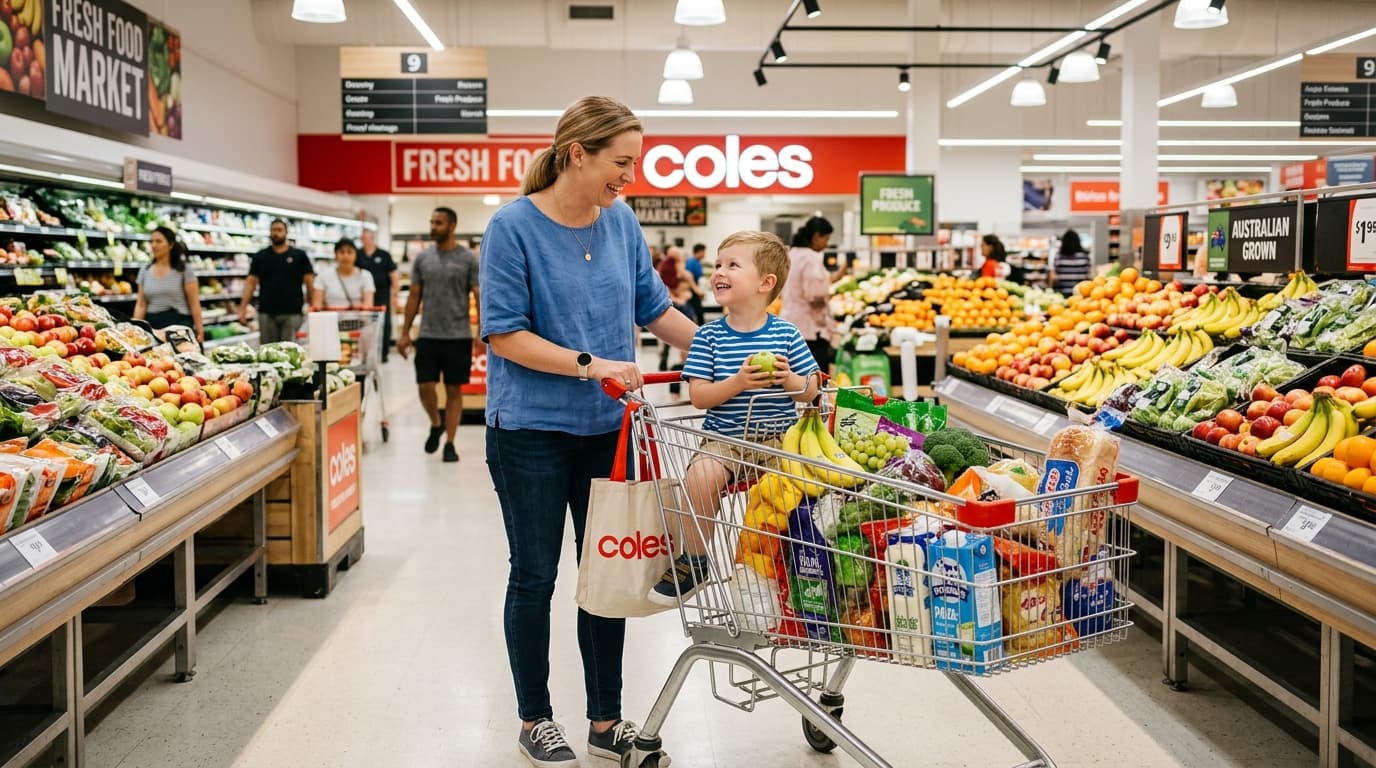
When a product you use regularly goes on half price, buy enough to last until it goes on special again (typically 4-6 weeks). This is the cornerstone of smart grocery shopping in Australia. If your usual laundry detergent drops from $22 to $11, buy two or three bottles. You have essentially locked in the lowest possible price.
The maths is straightforward: if you always buy at half price instead of full price, you halve your spend on those items. Even if you only do this for 20-30 regular items, the savings compound rapidly. A family that stockpiles strategically can save $2,000-$3,000 per year without changing what they eat.
Tip 9: Know What to Stockpile (Long Shelf Life Items)
Not everything is worth stockpiling. Focus on non-perishable and long shelf life items that you use consistently. The best items to stockpile include:
- Tinned goods (tomatoes, beans, tuna, soups) — 2-5 year shelf life
- Pasta, rice, and grains — 1-2 years
- Coffee and tea — 6-12 months
- Laundry detergent and cleaning products — indefinite
- Toiletries (shampoo, toothpaste, soap) — 2-3 years
- Cooking oils and sauces — 6-12 months
- Cereal and muesli bars — 3-6 months
- Frozen meat and vegetables — 6-12 months in the freezer
You do not need a massive pantry to stockpile effectively. Even a small shelf dedicated to specials can hold enough to see you through until the next sale cycle. The key is buying only what you will actually use before it expires.
Tip 10: Track Price Cycles (Most Items Go on Special Every 4-6 Weeks)
Supermarkets in Australia follow predictable pricing cycles. Most branded products go on half price approximately every 4-6 weeks. Some items, like soft drinks and chocolate, cycle even more frequently — every 2-3 weeks. Premium items like coffee and nappies may only go on special every 6-8 weeks.
Once you recognise these cycles, you never need to pay full price again. Keep a simple note in your phone tracking when your most-bought items go on special. After a couple of months, you will see the pattern clearly. Or save yourself the effort and use Milk n Eggs to track specials automatically across Coles, Woolworths, and Aldi.
Choose Store Brands (Tips 11-13)
Switching to home brand products is one of the easiest ways to cut your grocery bill without sacrificing quality. On average, store brands cost 30-50% less than their name brand equivalents. For a family spending $300 per week, that could mean savings of $40-$60 just by swapping brands.
Tip 11: Switch to Home Brand for Pantry Staples
Start with the items where brand genuinely does not matter. Flour is flour. Sugar is sugar. Canned tomatoes are canned tomatoes. For basic pantry staples, the home brand version is often made in the same factory as the name brand — the only difference is the label and the price.
Items where you are unlikely to notice any difference with home brand include: plain flour, white sugar, table salt, white rice, plain pasta, canned beans and lentils, canned tomatoes, cooking oil, white vinegar, and basic spices. That list alone covers a significant chunk of your pantry spend.
Tip 12: Compare Coles, Woolworths, and Aldi Own Brands
Not all home brands are created equal, and each supermarket has different tiers. Coles offers its budget range, standard Coles Brand, and the premium Coles Finest line. Woolworths has The Odd Bunch (budget produce), standard Woolworths brand, and Woolworths Gold (premium). Aldi essentially operates on a home brand model for most of its range.
For a detailed breakdown of how these stores compare on price, check out our cheapest supermarket in Australia analysis. Generally, Aldi tends to be the cheapest for home brand equivalents, followed by Coles, then Woolworths — but there are exceptions for specific products.
Tip 13: Try Before You Commit — Some Store Brands Are Better Than Name Brands
Here is a tip that surprises many people: some home brand products are actually betterthan the name brand equivalent. Aldi's Belmont chocolate biscuits regularly beat Tim Tams in blind taste tests. Coles Finest sourdough is considered by many to be superior to most name brand breads. Woolworths Macro range offers organic options that rival specialist brands at a fraction of the price.
The best approach is to try one home brand product per shop. Buy the smallest available size to test it. If you like it, switch permanently. If not, you have only spent a couple of dollars finding out. Over a few months, you will naturally build a list of store brand swaps that work for your family — and the cumulative savings can be substantial.

Reduce Food Waste (Tips 14-16)
Australian households throw away an average of $1,036 worth of food per year, according to the CSIRO. That is nearly $20 per week going straight in the bin. Reducing food waste is not just good for the environment — it is one of the simplest ways to cut your grocery costs without buying anything differently.
Tip 14: Plan Meals Around What You Already Have
Before you plan next week's meals, do a quick audit of your fridge, freezer, and pantry. What needs using up? That half-used bag of frozen vegetables, the tin of coconut milk from three weeks ago, the chicken thighs in the freezer — build at least two or three meals around what you already have before adding anything to your shopping list.
A practical approach is to have one "clean out the fridge" meal per week — stir-fries, fried rice, frittatas, and soups are perfect for using up odds and ends. This single habit can save you $10-$15 per week in food that would otherwise be wasted.
Tip 15: Use Your Freezer Properly
Your freezer is your most underrated kitchen appliance when it comes to saving money. Almost anything can be frozen: bread (slice it first for easy single-serve defrosting), cheese (grate it before freezing), bananas (peel and freeze for smoothies), herbs (chop and freeze in ice cube trays with olive oil), and of course meat and leftover meals.
When you spot a half-price special on meat, buy extra and freeze it in meal-sized portions. Cook large batches of soups, curries, and bolognese and freeze individual serves for quick midweek dinners. Label everything with the date and contents — a chest freezer full of mystery packages is not helpful to anyone.
Tip 16: Understand Date Labels (Best Before vs Use By)
This is one of the biggest sources of unnecessary food waste in Australia. Many people throw away perfectly good food because they confuse "best before" with "use by" — and they mean very different things.
Use by dates are about food safety. Do not eat food past its use by date — this applies to fresh meat, dairy, and ready-made meals. Best before dates are about quality. The food is still perfectly safe to eat after this date; it just might not be at its absolute peak. Tinned goods, dry pasta, cereals, and many other products are fine for weeks or even months past their best before date.
Many supermarkets also offer discounted items approaching their use by date — look for yellow stickers and reduced-to-clear sections, particularly in the late afternoon. These can be excellent bargains if you plan to use or freeze the item that day.
Maximise Loyalty Programs (Tips 17-19)
Loyalty programs in Australia are not going to make you rich, but when used strategically alongside other savings tactics, they add another layer of value. The trick is knowing how to stack these benefits for maximum impact.
Tip 17: Use Flybuys at Coles Strategically
Flybuys at Coles earns you 1 point per dollar spent, with 2,000 points worth $10 off your shop. That is essentially a 0.5% return — not huge on its own. But the real value comes from bonus point offers and targeted deals in the Flybuys app.
Check the Flybuys app weekly for personalised bonus offers. You might see "Earn 500 bonus points when you spend $30 on fruit and veg" or "10x points on Coles Brand cleaning products." These offers can boost your effective return to 5-10%, which starts to become meaningful. Always activate offers in the app before you shop — they do not apply automatically.
One smart strategy: save your Flybuys points for the quarterly "swap for 10% off your shop" promotion, where 2,000 points gets you 10% off your entire shop (up to a cap). If you time a large stockpile shop with this promotion, the savings multiply nicely.
Tip 18: Stack Everyday Rewards Offers at Woolworths
Woolworths Everyday Rewards works similarly — you earn 1 point per dollar, and 2,000 points equals a $10 discount. But Woolworths also offers weekly boosted products where you earn 10x or 20x points on specific items.
The gold mine is stacking: if an item is both on half-price special and offering 10x Everyday Rewards points, you get a massive discount plus bonus points. Plan your Woolworths shop around these overlaps. Also look for Everyday Rewards exclusive prices — products with a special lower price only available to Everyday Rewards members. These can be significant, sometimes matching or beating Aldi prices.
Tip 19: Combine Loyalty Points with Specials for Maximum Savings
The ultimate savings strategy combines every tool at your disposal. Here is what a fully optimised shop looks like:
- Check the weekly specials on Milk n Eggs
- Identify items that are both on special and have bonus loyalty points
- Activate all relevant bonus point offers in your loyalty app
- Time your big stockpile shops with loyalty program promotions (like 10% off events)
- Use accrued points to reduce the cost of your non-special items
When you layer half-price specials, bonus loyalty points, and loyalty program promotions, it is not unusual to save 50-60% on individual items. Over a full shop, this approach consistently delivers 30-40% total savings.
Unit Pricing Strategy (Tips 20-21)
Unit pricing is one of the most overlooked money-saving tools available to Australian shoppers — and it is right there on the shelf label. Understanding unit prices can save you $15-$25 per week without any extra effort.
Tip 20: Always Check the Unit Price Tag
By law, Australian supermarkets must display the unit price (price per kilogram, per litre, per 100ml, etc.) on the shelf label alongside the total price. This is the only reliable way to compare value between different brands and different sizes of the same product.
For example, a 500g jar of peanut butter at $5.00 ($10.00/kg) might look cheaper than a 780g jar at $6.50 — but the larger jar works out to just $8.33/kg, saving you $1.67 per kilogram. Over time, these differences add up significantly. Use our unit price calculator to quickly compare products when shopping online or planning your list.
Tip 21: Bigger Is Not Always Cheaper
This is a common trap. Most people assume that buying the bigger pack always saves money — but that is frequently not the case. Supermarkets know shoppers think this way, and sometimes the smaller size actually has a lower unit price than the bulk option.
This is especially true when smaller sizes go on special. A half-price 400g tin of coffee might work out cheaper per kilogram than the "value" 1kg tin at full price. Always check the unit price, never assume the big pack is the best deal. It takes two seconds to glance at the shelf label and it can save you a surprising amount over the course of a year.
Seasonal and Fresh Produce (Tips 22-23)
Fresh produce is one of the biggest categories in any grocery shop, and it is also where some of the biggest savings are hiding — if you know when to buy what.
Tip 22: Buy Seasonal Fruits and Vegetables
Buying fruit and vegetables in season can save you 40-60% compared to buying them out of season. Strawberries in winter can cost $6-$8 per punnet, but in summer they drop to $2-$3. Mangoes go from $4 each in spring to $1-$2 at the peak of summer. Asparagus, avocados, stone fruits — everything has its season, and the price difference is dramatic.
As a quick guide for Australia: summer (December-February) is best for stone fruits, berries, mangoes, and salad vegetables. Autumn (March-May) brings apples, pears, broccoli, and cauliflower. Winter (June-August) is the time for citrus fruits, root vegetables, and Asian greens. Spring (September-November) offers asparagus, peas, and the first strawberries of the season.
Also look for "ugly" or imperfect produce ranges — Woolworths' The Odd Bunch and similar offerings give you perfectly good fruit and vegetables at a discount, simply because they do not look picture-perfect.
Tip 23: Frozen vs Fresh — When Frozen Is Smarter
There is a persistent myth that frozen produce is nutritionally inferior to fresh. In reality, frozen fruits and vegetables are often picked and snap-frozen at peak ripeness, which can actually preserve more nutrients than fresh produce that has spent days in transit and on the shelf.
From a cost perspective, frozen vegetables are a clear winner for cooking. A 1kg bag of frozen mixed vegetables costs around $3-$4 and lasts for months. The equivalent weight of fresh mixed vegetables would cost $8-$12 and needs to be used within a week. For stir-fries, soups, casseroles, and curries, frozen vegetables are nutritionally equivalent and significantly cheaper.
Frozen berries are another great example — a 500g bag costs $4-$5 year-round, while fresh berries can be $6-$8 for a 250g punnet out of season. For smoothies, baking, and porridge toppings, frozen berries are the smart choice.
Online Shopping (Tips 24-25)
Online grocery shopping has gone from a novelty to a mainstream habit for many Australian families. Used strategically, it can actually help you spend less — even with delivery fees.
Tip 24: Use Online Shopping to Avoid Impulse Buys
The average Australian shopper adds $20-$40 of unplanned itemsper in-store visit. Those end-of-aisle displays, checkout counter confectionery, and "new product" showcases are all designed to tempt you into spending more. Online shopping removes most of these triggers.
When you shop online, you can see your running total as you add items. This makes it much easier to stick to your budget. You can also reorder previous shops with one click, which is perfect for your regular staple items. Just add any specials on top of your standard order.
Pro tip: add everything to your cart, then walk away for 30 minutes before checking out. When you come back, remove anything that does not feel essential. This cooling-off period is the online equivalent of "sleep on it" and typically saves you $10-$20 per shop.
Tip 25: Compare Delivery Fees and Minimum Spend
Delivery fees vary significantly between services and time slots. Coles and Woolworths both offer free or reduced delivery for orders over certain thresholds, and off-peak delivery windows (early morning or midweek) are typically cheaper than weekend slots.
Consider delivery subscription plans if you shop online regularly. Woolworths' Delivery Unlimited and Coles Plus offer unlimited deliveries for a monthly or annual fee, which can work out cheaper if you do a weekly online shop. Compare the subscription cost against what you would pay in individual delivery fees to see if it makes sense for your household.
Also factor in the savings from reduced impulse buying. If online shopping helps you avoid $30 of impulse purchases per week, a $7 delivery fee still leaves you $23 better off. Set a weekly shop budget and use the online cart total to keep yourself accountable.
INFOGRAPHIC
The Wednesday Shopping Strategy
The optimal weekly routine to maximise your grocery savings
Tuesday Night
Check Milk n Eggs for new specials dropping tomorrow. Plan meals around the best deals.
Wednesday Morning
Compare Coles vs Woolworths deals side by side. Decide which store(s) to visit.
Wednesday
Shop the best deals from each store. Stock up on half-price specials you use regularly.
Rest of Week
Stick to your list. Avoid impulse top-up shops. Use what you have in the fridge and freezer.
Savings Comparison: How Much Can Each Strategy Save You?
Here is a realistic breakdown of how much each strategy can save an average Australian family per week, based on a $300 weekly grocery spend:
| Strategy | Est. Weekly Saving | Effort | Annual Saving |
|---|---|---|---|
| Meal planning + shopping list | $25-$40 | Low | $1,300-$2,080 |
| Shopping on Wednesday | $10-$15 | Low | $520-$780 |
| Using price tracking tools | $15-$25 | Low | $780-$1,300 |
| Buying on special + stockpiling | $30-$50 | Medium | $1,560-$2,600 |
| Switching to home brands | $20-$35 | Low | $1,040-$1,820 |
| Reducing food waste | $15-$20 | Medium | $780-$1,040 |
| Loyalty program optimisation | $5-$10 | Low | $260-$520 |
| Unit price awareness | $5-$10 | Low | $260-$520 |
| Seasonal produce | $10-$15 | Low | $520-$780 |
| Online shopping (reduced impulse) | $15-$25 | Low | $780-$1,300 |
Important note: These savings overlap — you cannot simply add them all together. But by combining the strategies that suit your household, a realistic total saving of 30-40% ($90-$120 per week) is entirely achievable. That is $4,680-$6,240 per year back in your pocket.
Putting It All Together: A Real-World Example
Let us walk through a real example to show how these strategies combine. Sarah and Tom from Melbourne are a family of four who were spending about $350 per week on groceries. Here is what happened when they started using these tips:
Week 1 changes: They started meal planning on Sunday evenings, checking Milk n Eggs for specials and writing a shopping list. They switched their big shop from Saturday to Wednesday. They swapped five pantry staples to home brand.
The result: Their first week's shop came to $263 — a saving of $87. The meal plan meant zero food waste that week. The Wednesday shop gave them first pick of half-price chicken breast ($5.50/kg instead of $11/kg) and half-price Bega cheese. The home brand swaps on flour, pasta, rice, tinned tomatoes, and cooking oil saved another $8.
Over the following month, their average weekly spend dropped to $245 — a consistent saving of about $105 per week, or roughly 30%. Over a year, that works out to approximately $5,460 in savings. They did not eat less. They did not sacrifice quality. They simply planned better, timed their purchases, and stopped paying full price for things that go on half price every month.
Frequently Asked Questions
How much does the average Australian family spend on groceries per week?
The average Australian family spends between $300 and $400 per week on groceries, though this varies significantly by family size, location, and dietary preferences. A single person typically spends $100-$150 per week, while a couple might spend $180-$250. Families in major cities like Sydney and Melbourne tend to spend more than those in regional areas due to higher food prices.
What is the cheapest day to shop for groceries in Australia?
Wednesday is generally the best day to shop for groceries in Australia. Both Coles and Woolworths launch their new weekly specials on Wednesday, giving you the widest selection of discounted items before popular deals sell out. Shopping early on Wednesday morning gives you the best chance of finding all advertised specials in stock.
Is Aldi really cheaper than Coles and Woolworths?
Aldi is generally 15-20% cheaper than Coles and Woolworths for comparable products, particularly pantry staples and household items. However, Coles and Woolworths often match or beat Aldi on specific items during half-price specials. The cheapest approach is to buy staples at Aldi and stock up on specials at Coles and Woolworths. Read our full cheapest supermarket analysis for detailed comparisons.
How can I save 30-40% on my grocery bill?
To save 30-40% on your grocery bill, combine several strategies: plan meals around weekly specials, use price tracking tools like Milk n Eggs, buy on half price and stockpile non-perishables, switch to home brands for pantry staples, reduce food waste by using your freezer and planning meals around what you have, and use loyalty programs strategically. No single tip delivers 30-40% alone — it is the combination that gets you there.
Are home brand products as good as name brands?
Many home brand products are manufactured in the same facilities as name brand equivalents and are virtually identical in quality. This is especially true for basic pantry staples like flour, sugar, pasta, canned goods, and cleaning products. Some premium home brands (Coles Finest, Woolworths Gold) are considered by many consumers to be equal or superior to name brands. The best approach is to try one home brand swap per shop and decide for yourself.
What does "best before" mean vs "use by" on food labels?
"Use by" dates relate to food safety — you should not consume food past its use by date. This applies to fresh meat, dairy, and ready-to-eat meals. "Best before" dates relate to quality, not safety — the food is still safe to eat after this date but may not be at peak quality. Products like tinned goods, dry pasta, and cereals are perfectly fine well past their best before date. Understanding this difference helps reduce unnecessary food waste.
How often do items go on half-price special at Coles and Woolworths?
Most branded grocery items go on half-price special every 4-6 weeks at Coles and Woolworths. Popular items like soft drinks and chocolate may cycle more frequently (every 2-3 weeks), while premium products like coffee and nappies may only go on special every 6-8 weeks. By tracking these cycles, you can time your purchases to always buy at the lowest price and stockpile enough to last until the next sale.
Is it worth doing an online grocery shop to save money?
Online grocery shopping can help you save money by eliminating impulse purchases — the average Australian adds $20-$40 of unplanned items per in-store visit. Having a running total visible as you shop makes it easier to stick to your budget. However, factor in delivery fees ($3-$15 per order) and minimum spend requirements. If the impulse savings exceed the delivery cost, online shopping comes out ahead. Delivery subscription plans can reduce per-order fees further.
The Bottom Line
Saving money on groceries in Australia does not require extreme couponing, giving up the foods you love, or spending hours each week hunting for deals. It comes down to a handful of smart habits: planning your meals, shopping on the right day, tracking specials, buying on half price, choosing home brands where it makes sense, and wasting less food.
Start with two or three tips from this guide — meal planning, Wednesday shopping, and tracking specials on Milk n Eggs — and you will likely see a noticeable difference in your first week. As those habits become second nature, add more strategies until you find the combination that works for your household.
With the average Australian family spending $300-$400 per week on groceries, even a 20% saving puts $3,000 to $4,000 back in your pocket every year. That is a family holiday, a chunk off the mortgage, or a solid boost to your savings. And it all starts with a simple weekly plan.
Sources
- Australian Bureau of Statistics — Household Expenditure Survey (2023-24)
- CSIRO — National Food Waste Strategy Feasibility Study
- Food Standards Australia New Zealand — Date Marking Guidelines
- ACCC — Unit Pricing Code of Conduct
- Cornell University — "Hungry shoppers buy more high-calorie foods" (JAMA Internal Medicine)
- Australian Institute of Food Safety — Shopping Behaviour Research
- Choice Australia — Supermarket Price Comparison Reports (2025-26)
Milk n Eggs Editorial Team
The Milk n Eggs team tracks thousands of grocery specials every week across Coles, Woolworths, and Aldi to help Australians save money on their weekly shop. We combine data-driven insights with practical tips tested by real families. Have a savings tip to share? Check out our latest deals.