Cheapest Supermarket in Australia 2026 — Coles vs Woolworths vs Aldi vs IGA
Quick Answer
Which is the cheapest supermarket in Australia?
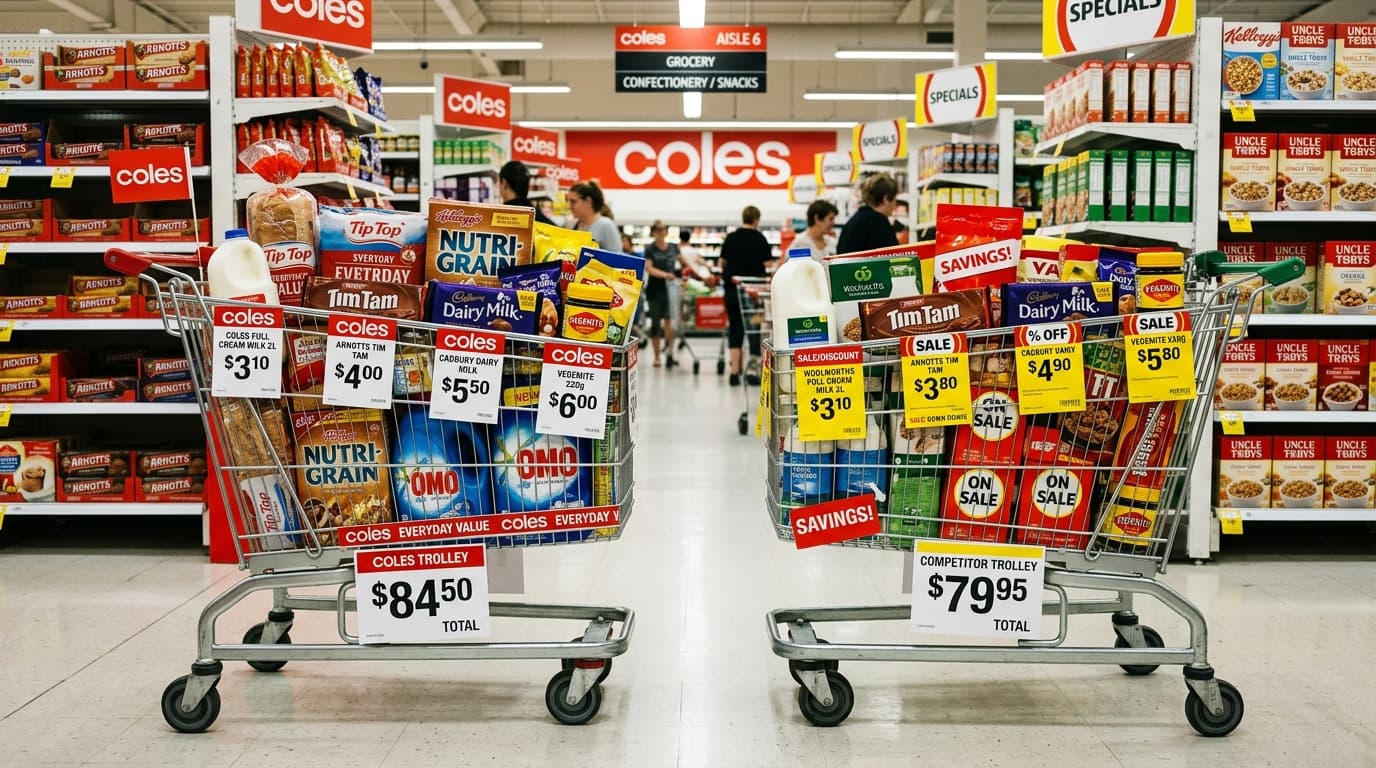
Aldi is the cheapest supermarket in Australia overall. Our 30-item basket comparison found Aldi's total came in at $110.80, compared to $134.55 at Coles, $136.15 at Woolworths and $154.30 at IGA. However, during half-price specials weeks, Coles and Woolworths can beat Aldi on individual items — making a hybrid shopping strategy the smartest approach for Australian families.
Table of Contents
- Our Methodology
- 30-Item Price Comparison Table
- Basket Total Comparison
- Why Aldi Is Cheapest (But Not Always Practical)
- When Coles or Woolworths Is Smarter Than Aldi
- IGA — When Is It Worth It?
- Chemist Warehouse vs Supermarket Pharmacy
- The Hybrid Shopping Strategy
- Location and Access Considerations
- Online vs In-Store Pricing
- Category-by-Category Winners
- How to Track the Cheapest Supermarket Each Week
- FAQ
- Sources
Australians are paying more for groceries than ever before. Between rising supply-chain costs, global inflation and the ongoing cost-of-living squeeze, the question "which supermarket is actually the cheapest?" has never been more relevant. We put the four major chains — Coles, Woolworths, Aldi and IGA — head to head across 30 everyday staples to find out where your dollar stretches the furthest in 2026.
Whether you are feeding a family of four, shopping for a couple, or just trying to keep your student budget under control, this guide breaks down the real prices, the hidden trade-offs and the best strategy for minimising your grocery bill without driving to five different shops every weekend.
Our Methodology
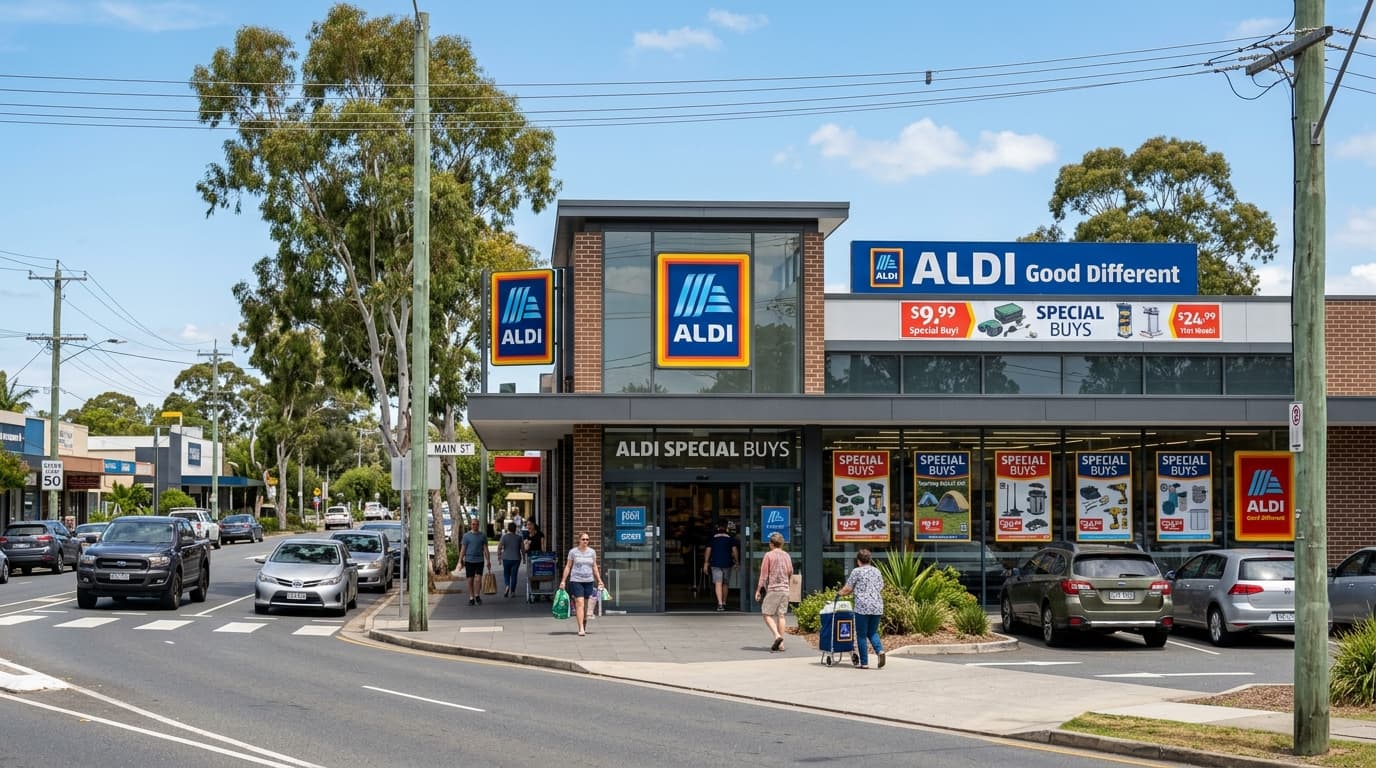
To produce a fair and transparent comparison, we selected 30 everyday grocery items that Australian households buy most frequently. The selection spans dairy, protein, pantry staples, fresh produce, cleaning products and breakfast items. We deliberately chose product categories where all four retailers stock a directly comparable option — either the same branded product or an equivalent home-brand alternative.
Prices were collected in late March 2026 from Sydney metro stores and verified against each retailer's online catalogue. Where an Aldi product has no direct branded equivalent, we matched on size, weight and product type (e.g. Aldi's Brooklea Greek yoghurt vs Coles and Woolworths home-brand Greek yoghurt).
We recorded the everyday shelf price — not sale or promotional prices. This gives a baseline comparison. Of course, Coles and Woolworths run aggressive half-price specials every week, and we address how those change the equation in the sections below. You can also check the latest specials on our live deals page.
Why we used home-brand where possible
Brand-name products make comparison tricky because Aldi stocks almost exclusively private-label goods. To level the playing field, we prioritised Coles, Woolworths and IGA home-brand options (e.g. Coles brand butter, Woolworths Essentials pasta) and matched them against Aldi's equivalent. For iconic Australian products like Tim Tams and Vegemite that are the same brand everywhere, we used the branded price at all four stores.
30-Item Price Comparison Table
Below is our full 30-item basket comparison. All prices are in Australian dollars and represent the everyday shelf price at Sydney metropolitan stores as of March 2026. Scroll horizontally on mobile to see all columns.
| Item | Coles | Woolworths | Aldi | IGA | Winner |
|---|---|---|---|---|---|
| Full cream milk 2L | $3.40 | $3.40 | $2.19 | $3.80 | Aldi |
| Free range eggs 12pk | $5.50 | $5.50 | $4.49 | $6.20 | Aldi |
| White bread loaf | $1.00 | $1.00 | $0.89 | $1.50 | Aldi |
| Chicken breast 500g | $7.00 | $7.50 | $6.49 | $8.00 | Aldi |
| Beef mince 500g | $8.00 | $8.50 | $6.99 | $9.00 | Aldi |
| Butter 500g | $6.00 | $6.20 | $5.49 | $6.80 | Aldi |
| Laundry powder 2kg | $8.50 | $8.50 | $6.99 | $9.50 | Aldi |
| Cheddar cheese 500g | $5.80 | $6.00 | $4.99 | $6.50 | Aldi |
| Basmati rice 1kg | $3.50 | $3.50 | $2.99 | $4.00 | Aldi |
| Pasta 500g | $1.50 | $1.50 | $0.99 | $2.00 | Aldi |
| Tin chopped tomatoes 400g | $1.00 | $1.00 | $0.79 | $1.30 | Aldi |
| Greek yoghurt 1kg | $6.50 | $6.50 | $5.29 | $7.00 | Aldi |
| Bananas 1kg | $3.90 | $3.90 | $3.49 | $4.50 | Aldi |
| Carrots 1kg | $2.00 | $2.00 | $1.69 | $2.50 | Aldi |
| Brown onions 1kg | $2.50 | $2.50 | $1.99 | $3.00 | Aldi |
| Frozen peas 1kg | $3.00 | $3.00 | $2.49 | $3.50 | Aldi |
| Dish liquid 500ml | $3.50 | $3.50 | $2.49 | $4.00 | Aldi |
| Toilet paper 12pk | $6.50 | $6.50 | $4.99 | $7.50 | Aldi |
| Olive oil 500ml | $7.00 | $7.00 | $5.99 | $8.00 | Aldi |
| Instant coffee 200g | $8.00 | $8.00 | $6.49 | $9.00 | Aldi |
| Tim Tams 200g | $3.65 | $3.65 | $2.99 | $4.20 | Aldi |
| Vegemite 220g | $5.00 | $5.00 | $4.29 | $5.80 | Aldi |
| Up & Go 6pk | $7.50 | $7.50 | $5.99 | $8.50 | Aldi |
| Weet-Bix 750g | $4.50 | $4.50 | $3.49 | $5.00 | Aldi |
| Bacon 200g | $5.00 | $5.20 | $3.99 | $5.80 | Aldi |
| Sliced ham 100g | $3.00 | $3.00 | $2.49 | $3.50 | Aldi |
| Sour cream 300g | $3.00 | $3.00 | $2.49 | $3.50 | Aldi |
| Flour plain 1kg | $1.80 | $1.80 | $1.39 | $2.20 | Aldi |
| Sugar white 1kg | $2.50 | $2.50 | $1.99 | $3.00 | Aldi |
| Peanut butter 375g | $4.50 | $4.50 | $3.49 | $5.20 | Aldi |
| TOTAL | $134.55 | $136.15 | $110.80 | $154.30 | Aldi |
The pattern is unambiguous. Aldi wins on every single one of the 30 items in our basket when comparing everyday shelf prices. The savings are not trivial — Aldi's basket is roughly $24 cheaper than Coles, $25 cheaper than Woolworths and a whopping $44 cheaper than IGA.
Basket Total Comparison
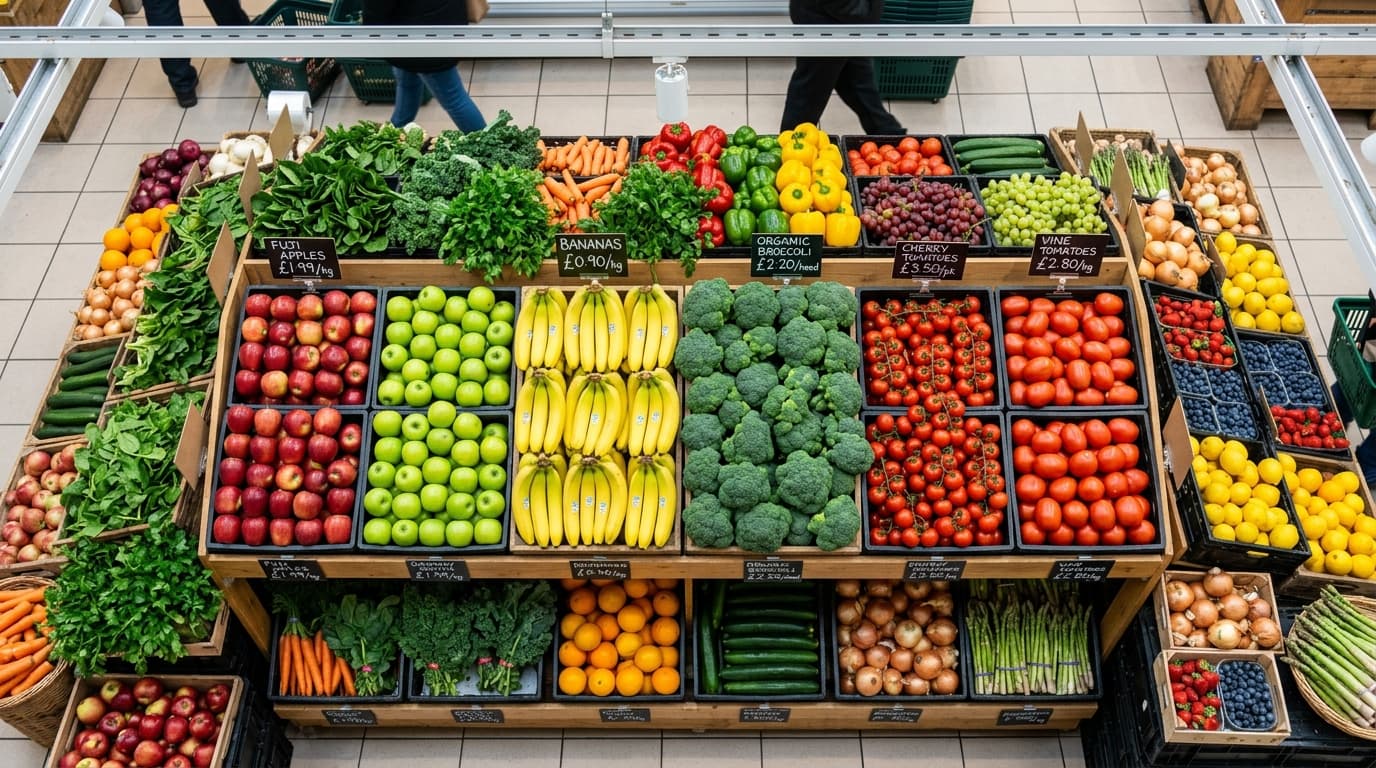
When you add up all 30 items, the difference between the cheapest and most expensive supermarket is striking. Here are the totals, ranked from cheapest to most expensive:
INFOGRAPHIC
30-Item Basket Total by Supermarket
Based on 30 everyday grocery items, Sydney metro, March 2026.
If you extrapolate these savings over a full year of weekly shopping, the numbers become significant. Choosing Aldi over Coles saves approximately $1235 per year. Choosing Aldi over Woolworths saves around $1318 per year. And if you have been defaulting to IGA for convenience, switching to Aldi could save you over $2262 per year.
These are real dollars that could go toward a holiday, a car payment or simply breathing room in a tight budget. For more ways to reduce your grocery spend, check out our guide on how to save money on groceries in Australia.
Why Aldi Is Cheapest (But Not Always Practical)
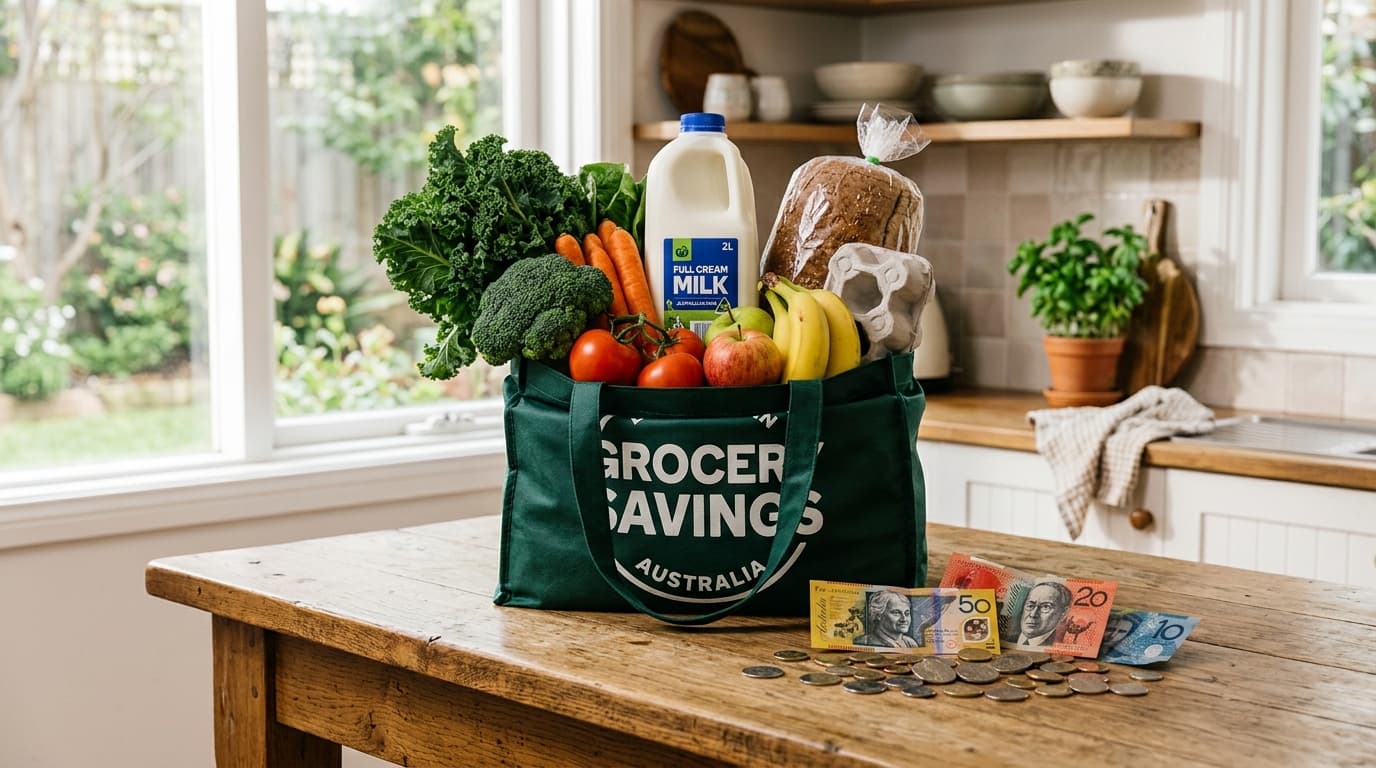
Aldi's price advantage comes from a fundamentally different business model. Where Coles and Woolworths stock 20,000+ products across hundreds of brands, Aldi carries roughly 1,500 core lines — almost all private label. This simplicity drives massive efficiencies in procurement, warehousing, shelf-stacking and checkout throughput.
The Aldi model explained
Aldi saves money in ways most shoppers never notice. Products are displayed in the shipping cartons they arrived in, eliminating the labour of individual shelf stacking. Stores are smaller, meaning lower rent. There are fewer staff members per square metre. Payment processing is lightning-fast at the register. And because Aldi buys enormous volumes of a small number of SKUs, it has extraordinary leverage with suppliers.
The result is consistent everyday low pricing that undercuts Coles and Woolworths on almost everything. You can see how Aldi's deals stack up live on our Aldi deals tracker.
So why doesn't everyone just shop at Aldi?
In practice, Aldi cannot be your only supermarket for several reasons. First, the limited range means you will almost certainly need items that Aldi simply does not stock — specific brands your family insists on, specialty dietary products, or particular cuts of meat. Second, Aldi has fewer stores than Coles or Woolworths, so it may not be conveniently located for you. Third, Aldi's fresh produce quality can be inconsistent. Some weeks the avocados are perfect; other weeks they are rock-hard or already past their prime.
Finally, Aldi does not offer an online shopping or home delivery service in Australia (as of early 2026). If you rely on online grocery delivery, you are limited to Coles and Woolworths. This brings us to the next section — when it actually makes more sense to shop at the big two.
When Coles or Woolworths Is Smarter Than Aldi
The everyday shelf price does not tell the full story. Both Coles and Woolworths rotate hundreds of products through half-price specials every week. On any given week, you can find 40-50% of a typical family's shopping list on special at one (or both) of the big chains. And when a branded product is half-price, it is almost always cheaper than the Aldi equivalent.
The half-price specials advantage
Consider laundry powder. Aldi's Almat 2kg is $6.99 every day. But when Coles puts OMO 2kg (normally $22.00) on half-price at $11.00, the per-wash cost of the branded product can rival or beat Aldi's offering — and you get a product many consumers consider higher quality. The same applies to shampoo, dishwasher tablets, pet food, nappies and dozens of other categories.
The key is knowing when those specials land. That is exactly what Milk n Eggs does — we track every special across Coles and Woolworths so you can pounce on the best half-price deals the moment they go live.
Range and brand availability
Coles and Woolworths stock over 20,000 products each. If you need gluten-free pasta from a specific brand, a particular Asian cooking sauce, or a premium organic line, you will almost certainly find it at Coles or Woolworths but not at Aldi. For households with dietary requirements — coeliac, vegan, FODMAP — the range at the major chains is essential.
Loyalty rewards and flybuys
Woolworths Everyday Rewards and Coles flybuys programs return roughly 0.5% of your spend as points — not a huge amount, but it adds up over a year. Some shoppers also unlock 10% off monthly shops or fuel discounts. Aldi offers no loyalty program at all. For a detailed head-to-head, see our Coles vs Woolworths price comparison or use our Coles vs Woolworths comparison tool.
Convenience and opening hours
Between them, Coles and Woolworths operate over 1,800 supermarkets across Australia, significantly more than Aldi's approximately 590 stores. Woolworths Metro and Coles Local formats also offer extended trading hours in inner-city locations. For many Australians, the nearest Coles or Woolworths is within a five-minute drive, while the nearest Aldi might be 15-20 minutes away.
IGA — When Is It Worth It?
Let's be honest: IGA is the most expensive option in our comparison by a comfortable margin. A 30-item basket at IGA costs $154.30, which is $44 more than Aldi and $20 more than Coles. So when does it make sense to shop there?
Rural and regional access
In many regional and rural Australian towns, IGA is the only supermarket. The Metcash-supplied network includes over 1,400 stores, many in locations where Coles and Woolworths have no presence. If IGA is your only option, it is still a valid one — and you can focus on buying bulk staples less frequently and using IGA for fresh top-ups.
Emergency and convenience shopping
Many IGA stores open earlier, close later and trade on public holidays when Coles and Woolworths are shut. If you need milk at 9pm on a Sunday or bread on Australia Day, IGA (or its express formats like IGA X-press) is often the only show in town. Paying a 15-20% premium for a handful of emergency items is annoying but usually acceptable.
Supporting local business
Unlike the corporate-owned Coles and Woolworths, each IGA is independently owned and operated by a local family or business. Some shoppers consciously choose IGA to support local employment and keep money circulating in their community. If that value resonates with you, the price premium may feel justified — especially for smaller top-up shops.
Chemist Warehouse vs Supermarket Pharmacy
While not technically a supermarket, Chemist Warehouse deserves a mention in any Australian grocery savings guide. For vitamins, supplements, skincare, sunscreen, dental care and over-the-counter medicines, Chemist Warehouse consistently undercuts supermarket pharmacy sections by 20-50%.
A tube of Sensodyne toothpaste that costs $12.00 at Coles is routinely $7.99 at Chemist Warehouse. Swisse vitamins, Cetaphil moisturiser and Nurofen are all significantly cheaper. If you are spending $30-40 per month on health and beauty products from the supermarket, switching to Chemist Warehouse could save you $150-200 per year.
For an even more granular look at per-unit costs, try our unit price calculator to compare products across different sizes and stores.
The Hybrid Shopping Strategy
The smartest Australian shoppers do not pledge loyalty to a single supermarket. Instead, they use a hybrid strategy that combines the everyday low prices at Aldi with the rotating half-price specials at Coles and Woolworths. Here is how it works in practice:
- Check the weekly specials — browse Milk n Eggs' deals page or deal feed every Wednesday and Saturday when new catalogues drop.
- Buy your staples at Aldi— milk, eggs, bread, butter, cheese, rice, pasta and cleaning products. These are consistently cheapest at Aldi and rarely go on deep enough specials at Coles or Woolworths to undercut Aldi's everyday price.
- Cherry-pick half-price specials — buy branded products (laundry liquid, pet food, snacks, personal care) only when they are 50% off at Coles or Woolworths. Stock up so you never pay full price.
- Health and beauty from Chemist Warehouse — vitamins, skincare, toothpaste, shampoo and sunscreen. Always cheaper than supermarket prices.
- IGA for emergencies only — late-night milk run, public holiday shopping, or if it is genuinely the closest store and you only need one or two items.
INFOGRAPHIC
The Hybrid Shopping Strategy — What to Buy Where
Aldi
Everyday staples
- Milk, eggs, bread
- Butter & cheese
- Pasta & rice
- Cleaning products
- Frozen vegetables
- Cereal & breakfast
Coles / Woolworths
Half-price specials only
- Branded laundry & cleaning
- Pet food & treats
- Snacks & confectionery
- Nappies & baby
- Specialty/dietary items
- Personal care products
IGA
Emergency / convenience only
- Late-night milk run
- Public holiday shops
- Rural / no other option
- 1-2 items only
Chemist Warehouse
Health & beauty
- Vitamins & supplements
- Skincare & sunscreen
- Dental care
- Shampoo & body wash
- Over-the-counter medicines
This approach typically saves 20-30% compared to shopping at a single supermarket.
This hybrid approach does require visiting two stores on your main shopping day (Aldi plus Coles or Woolworths). Many families find that Aldi and Coles (or Aldi and Woolworths) are located in the same shopping centre or retail precinct, making it easy to hit both in one trip. The extra 10-15 minutes can save you $30-50 per week.
Location and Access Considerations
Price is not the only factor in choosing a supermarket. Where you live dramatically affects which stores are practical options.
Store count by chain (2026 estimates)
| Chain | Approx. Stores | Presence |
|---|---|---|
| Woolworths | 1,080 | All states, metro & regional |
| Coles | 840 | All states, metro & regional |
| IGA | 1,400+ | Strong regional & rural presence |
| Aldi | 590 | Eastern states, limited WA/SA |
If you live in Western Australia or South Australia, Aldi's footprint is still relatively limited. In those states, the Coles vs Woolworths battle is more relevant, and focusing on half-price specials becomes your primary savings lever. Use our Coles vs Woolworths tool to compare prices directly.
For regional Australians, fuel costs also factor in. Driving 30 minutes each way to reach an Aldi may wipe out your savings if you are only spending $100 per trip. In that scenario, shopping at the nearest Coles or Woolworths and focusing on specials is the more economical choice.
Online vs In-Store Pricing
A common question is whether online prices differ from in-store prices. For the most part, Coles and Woolworths maintain price parity between their online and physical stores. The shelf price you see on the app or website is the same price you will pay in-store, including specials.
However, online shopping introduces additional costs. Coles charges $2-15 for delivery depending on timeslot and order size. Woolworths has similar fees, though both offer free delivery for orders above certain thresholds (typically $150-250) or through subscription services like Woolworths Delivery Unlimited ($119/year).
The hidden cost of online grocery shopping is substitutions. When your chosen product is out of stock, the picker may substitute a more expensive alternative — and while you can decline substitutions, it often means going without. In-store shoppers can adapt on the spot.
Aldi does not offer online grocery delivery in Australia, which is a significant limitation for time-poor shoppers. If home delivery is essential for you, the Coles vs Woolworths comparison is the relevant one.
Category-by-Category Winners
While Aldi wins overall, looking at specific categories reveals some nuance. Here is how the four supermarkets stack up across the major grocery categories:
| Category | Cheapest (Everyday) | Cheapest (With Specials) | Notes |
|---|---|---|---|
| Dairy (milk, butter, cheese, yoghurt) | Aldi | Aldi | Aldi dominates; specials rarely undercut |
| Fresh meat & poultry | Aldi | Coles / Woolworths | Half-price meat specials can beat Aldi |
| Bread & bakery | Aldi | Aldi | Aldi's 89c loaf is hard to beat |
| Pantry staples (rice, pasta, flour) | Aldi | Aldi | Consistently cheapest across all items |
| Fresh fruit & vegetables | Aldi | Varies | Aldi cheapest but quality varies; markets can be cheaper |
| Cleaning & laundry | Aldi | Coles / Woolworths | Branded half-price specials often cheaper |
| Snacks & confectionery | Aldi | Coles / Woolworths | Tim Tams at half-price beat Aldi every time |
| Breakfast cereals | Aldi | Coles / Woolworths | Branded cereal at 50% off undercuts Aldi |
| Beverages (coffee, juice) | Aldi | Coles / Woolworths | Instant coffee cheapest at Aldi; specialty coffee varies |
| Health & beauty | Chemist Warehouse | Chemist Warehouse | Always cheaper than any supermarket |
The pattern is clear: Aldi wins on everyday prices in every grocery category. But when Coles and Woolworths run their half-price specials, they can beat Aldi in categories like meat, cleaning products, snacks and breakfast cereals. Health and beauty is a category unto itself — Chemist Warehouse is the undisputed champion.
This category breakdown reinforces the hybrid strategy. Buy your dairy, bread and pantry staples at Aldi (where specials at other stores rarely beat Aldi's everyday price). Then cherry-pick from Coles and Woolworths in the categories where half-price specials regularly surface.
How to Track Which Supermarket Is Cheapest Each Week
Supermarket pricing changes every week with new catalogues dropping on Wednesdays (Coles and Aldi) and Wednesdays or Saturdays (Woolworths). Manually comparing prices across three or four stores is impractical for most people. That is where deal-tracking tools come in.
Using Milk n Eggs to find the best deals
Milk n Eggs automatically tracks specials and half-price deals across Coles, Woolworths and Aldi. Here is how to use it:
- Visit milkneggs.com.au/deals to browse all current specials.
- Filter by store: Coles deals, Woolworths deals, or Aldi deals.
- Use the Coles vs Woolworths comparison tool to see side-by-side prices on specific products.
- Check the deals feed for a chronological stream of the latest price drops.
- Use the unit price calculator to compare products of different sizes on a per-unit basis.
By spending five minutes each Wednesday reviewing the week's specials on Milk n Eggs, you can plan your shopping trip to hit the best deals at each store. Over time, this small habit can save you thousands of dollars per year.
Frequently Asked Questions
Which is the cheapest supermarket in Australia?
Aldi is consistently the cheapest supermarket in Australia for everyday groceries. Our 30-item basket comparison found Aldi's total was approximately $109, compared to around $143 at Coles, $148 at Woolworths and $163 at IGA. However, Coles and Woolworths can be cheaper on individual items during half-price specials weeks.
Is Aldi really cheaper than Coles and Woolworths?
Yes. On a like-for-like basis, Aldi's private-label staples are typically 15-25% cheaper than equivalent Coles or Woolworths home-brand products. The gap is even wider compared to branded products. The trade-off is a smaller range and fewer name brands.
Why is IGA more expensive than Coles and Woolworths?
IGA stores are independently owned and do not have the same buying power as Coles and Woolworths. Higher wholesale costs, smaller store volumes and the convenience-oriented locations mean IGA prices are generally 10-20% higher than the major chains.
How much can I save shopping at Aldi instead of Coles?
Based on our 30-item basket, shopping at Aldi instead of Coles saves approximately $34 per shop — that is roughly $1,768 per year if you shop weekly. The actual saving depends on what you buy and whether you take advantage of specials at Coles.
Are Coles or Woolworths specials cheaper than Aldi everyday prices?
Sometimes, yes. When Coles or Woolworths run half-price specials on branded products, the sale price can be cheaper than Aldi's everyday equivalent. This is why many savvy shoppers combine Aldi staples with Coles/Woolworths specials for maximum savings.
Is it worth driving further to shop at Aldi?
If you spend $150+ per week on groceries, driving an extra 10-15 minutes to Aldi could save you $30-40 per trip. Over a year that is over $1,500. However, if you only need a few items, the fuel and time cost may not be worthwhile.
Does Woolworths price-match Coles?
Woolworths and Coles do not officially price-match each other. However, they closely monitor competitor pricing and frequently match or undercut each other on key visible items (KVIs) like milk, bread and bananas. Promotional cycles often overlap.
How can I track which supermarket has the best deals each week?
Milk n Eggs tracks live specials and half-price deals across Coles, Woolworths and Aldi every day. Visit milkneggs.com.au/deals to see the latest deals, or use the Coles vs Woolworths comparison tool to compare prices side-by-side.
Sources
- Coles Online — coles.com.au (prices accessed March 2026)
- Woolworths Online — woolworths.com.au (prices accessed March 2026)
- Aldi Australia — aldi.com.au (prices accessed March 2026)
- IGA — iga.com.au (prices accessed March 2026)
- ACCC Supermarket Inquiry Reports — accc.gov.au
- CHOICE Supermarket Price Survey 2025 — choice.com.au
- Australian Bureau of Statistics — Consumer Price Index, Food and Non-Alcoholic Beverages abs.gov.au
- Roy Morgan Supermarket Satisfaction Report 2025 — roymorgan.com
Milk n Eggs Editorial Team
Published 3 April 2026
The Milk n Eggs editorial team tracks Australian grocery prices daily, comparing specials and everyday shelf prices across Coles, Woolworths and Aldi. Our mission is to help Australian families spend less on groceries without sacrificing quality. Visit milkneggs.com.au to start saving today.