Quick Answer
Yes, you can feed a family of 4 for $150–200 per week in Australia.The key is shopping at Aldi for staples, buying specials at Coles/Woolworths, focusing on budget proteins like eggs, lentils, chicken thigh, and mince, and planning meals around what's on sale. This guide gives you the complete weekly meal plan, shopping list, and strategy to make it work.
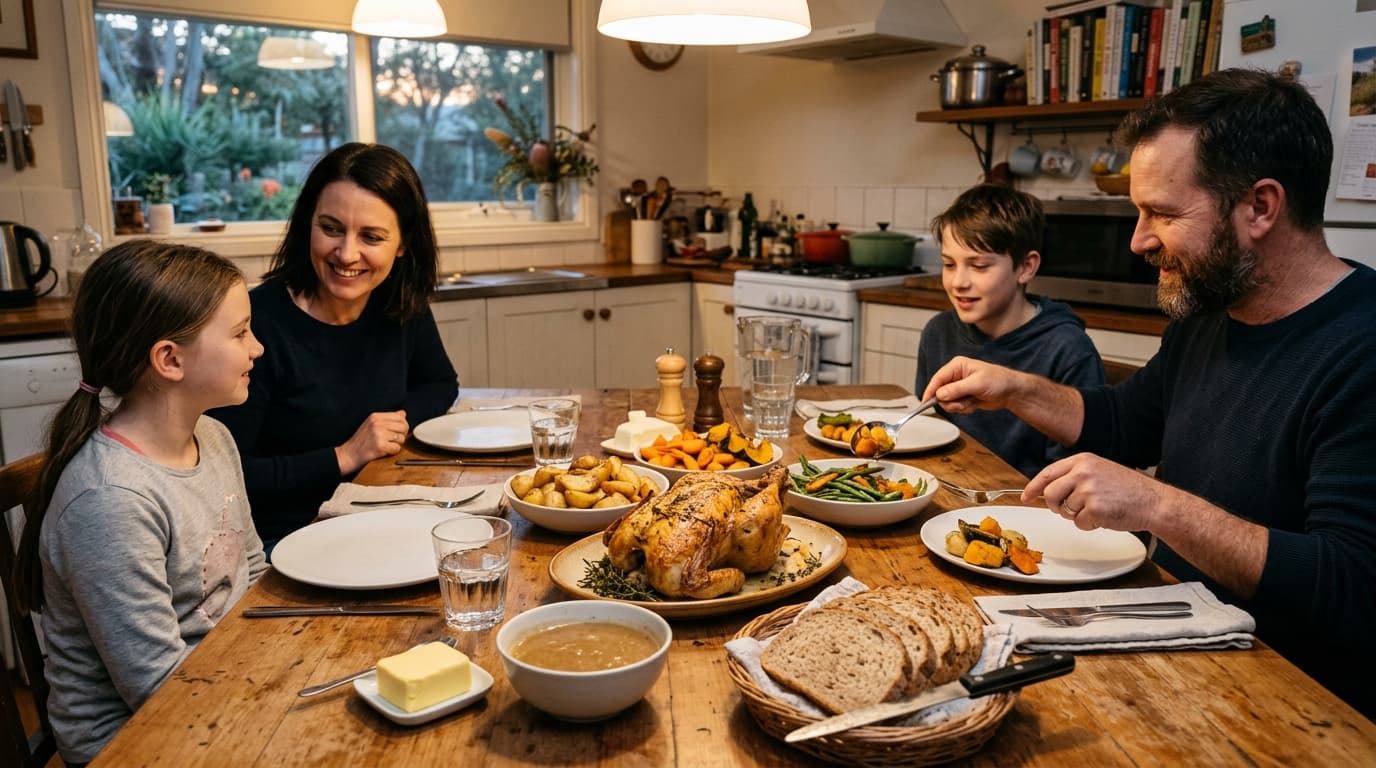
Grocery prices in Australia have climbed significantly over the past few years. According to the ABS, food and non-alcoholic beverages rose 3.5% in the year to March 2026. For a family of four, the average weekly grocery bill now sits between $250 and $350 — and for many households, that's simply too much.
But here's the thing: with the right strategy, you genuinely can feed a family of four nutritious, varied meals for under $200 a week. We've done it ourselves, and we've built this guide to show you exactly how — with a full meal plan, a complete shopping list with real Australian prices, and practical tips that actually work.
Whether you're a family trying to cut costs, a couple looking to save, or a single person wanting to eat well on $60–80 a week, this guide has a section for you. Use our weekly shop budget calculator to set your own target, then follow the plan below.
Full Weekly Meal Plan — Family of 4 Under $200
This meal plan is designed around affordable, practical meals that Australian families actually eat. Every meal uses ingredients from the shopping list below, and we've estimated the cost per meal based on April 2026 supermarket prices.
| Day | Breakfast | Lunch | Dinner | Est. Cost |
|---|---|---|---|---|
| Monday | Porridge with banana & honey ($1.80) | Ham & cheese sandwiches, apple ($3.50) | Spaghetti bolognese with beef mince ($8.50) | $13.80 |
| Tuesday | Toast with peanut butter ($1.20) | Leftover bolognese on toast ($2.00) | Chicken thigh stir-fry with rice & frozen veg ($9.00) | $12.20 |
| Wednesday | Scrambled eggs on toast ($2.50) | Vegemite & cheese sandwiches, carrot sticks ($2.80) | Lentil dahl with rice & naan ($5.50) | $10.80 |
| Thursday | Weetbix with milk & banana ($1.60) | Tuna & corn wraps ($3.20) | Sausage & veg tray bake with potatoes ($8.00) | $12.80 |
| Friday | Porridge with apple & cinnamon ($1.80) | Egg & lettuce sandwiches ($2.50) | Homemade pizza on wraps with ham, cheese, capsicum ($7.50) | $11.80 |
| Saturday | Pancakes with maple syrup ($2.50) | Toasted cheese & tomato sandwiches ($2.50) | Chicken fried rice with frozen veg & egg ($7.00) | $12.00 |
| Sunday | Baked beans on toast ($2.00) | Leftover chicken fried rice ($1.50) | Slow-cooked beef & vegetable stew with bread ($9.50) | $13.00 |
| Weekly Total (meals only, family of 4) | $86.40 | |||
Add in snacks, basics (oil, salt, condiments), and incidentals, and your total weekly spend comes to around $150–$190 depending on what's on special. The meal costs above assume buying at the best available price across Aldi, Coles, and Woolworths.
Check this week's live deals to find specials that can bring these costs down even further.
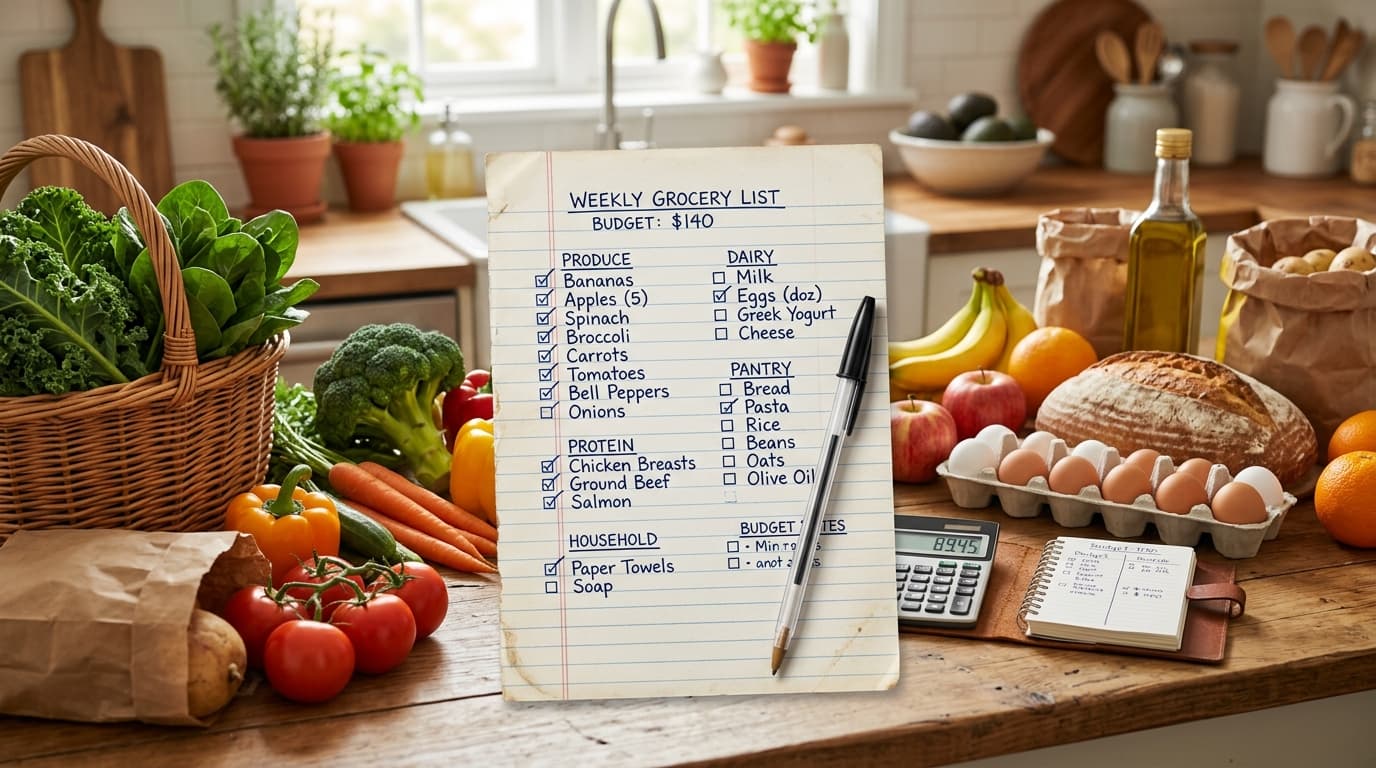
Complete Budget Shopping List by Category (With Prices)
Here's the full weekly shopping list to make the meal plan above work. Prices are based on April 2026 everyday prices and current specials across major Australian supermarkets.
Pantry Staples
| Item | Quantity | Est. Price | Best Buy |
|---|---|---|---|
| White rice | 2 kg | $3.50 | Aldi |
| Spaghetti pasta | 1 kg | $1.50 | Aldi |
| Rolled oats | 1 kg | $2.29 | Aldi |
| Tinned tomatoes (4 pack) | 4 x 400g | $3.60 | Aldi |
| Tinned baked beans | 2 x 420g | $2.00 | Aldi |
| Tinned tuna | 3 x 95g | $3.00 | Aldi |
| Dried red lentils | 500g | $2.50 | Aldi |
| Tinned corn kernels | 2 x 420g | $2.00 | Aldi |
| Plain flour | 1 kg | $1.49 | Aldi |
| Peanut butter | 375g | $3.29 | Aldi |
| Vegemite | 220g | $4.00 | Coles (on special) |
| Soy sauce | 500ml | $1.99 | Aldi |
| Cooking oil (canola) | 750ml | $3.49 | Aldi |
Fresh Produce
| Item | Quantity | Est. Price | Best Buy |
|---|---|---|---|
| Bananas | 1 kg | $3.50 | Aldi |
| Apples (Royal Gala) | 1 kg | $4.50 | Aldi |
| Onions (brown) | 1 kg bag | $2.49 | Aldi |
| Carrots | 1 kg bag | $1.99 | Aldi |
| Potatoes | 2 kg bag | $4.49 | Aldi |
| Tomatoes | 500g | $3.00 | Woolworths |
| Lettuce (iceberg) | 1 head | $2.50 | Aldi |
| Capsicum (green) | 1 | $1.50 | Aldi |
| Garlic | 1 bulb | $0.80 | Aldi |
| Ginger | 1 knob | $0.60 | Aldi |
Meat & Protein
| Item | Quantity | Est. Price | Best Buy |
|---|---|---|---|
| Chicken thigh fillets | 1 kg | $9.50 | Aldi / Coles on special |
| Beef mince (regular) | 500g | $6.50 | Aldi / Woolworths on special |
| Beef chuck steak (stew) | 500g | $8.00 | Coles on special |
| Pork sausages | 500g (8 pack) | $4.50 | Aldi |
| Eggs (free range) | 12 pack | $5.99 | Aldi |
| Deli ham | 200g | $3.49 | Aldi |
Dairy & Fridge
| Item | Quantity | Est. Price | Best Buy |
|---|---|---|---|
| Full-cream milk | 3L | $4.50 | Aldi |
| Tasty cheese block | 500g | $5.99 | Aldi |
| Butter | 250g | $3.79 | Aldi |
| Yoghurt (natural) | 1 kg | $4.49 | Aldi |
| Wraps/tortillas | 8 pack | $2.49 | Aldi |
Bakery & Bread
| Item | Quantity | Est. Price | Best Buy |
|---|---|---|---|
| Sandwich bread (white) | 2 loaves | $3.18 | Aldi ($1.59 ea) |
| Naan bread | 4 pack | $2.99 | Aldi |
Frozen
| Item | Quantity | Est. Price | Best Buy |
|---|---|---|---|
| Frozen mixed vegetables | 1 kg | $2.89 | Aldi |
| Frozen stir-fry vegetables | 500g | $2.49 | Aldi |
| Frozen peas | 1 kg | $2.69 | Aldi |
Snacks & Extras
| Item | Quantity | Est. Price | Best Buy |
|---|---|---|---|
| Honey | 500g | $4.99 | Aldi |
| Maple syrup | 250ml | $4.49 | Aldi |
| Weetbix | 575g | $4.00 | Coles on special |
Weekly Budget Breakdown — Family of 4
$34.66
Pantry Staples
$25.37
Fresh Produce
$37.98
Meat & Protein
$21.26
Dairy & Fridge
$6.17
Bakery
$8.07
Frozen
~$147
Estimated Weekly Total (before snacks & extras)
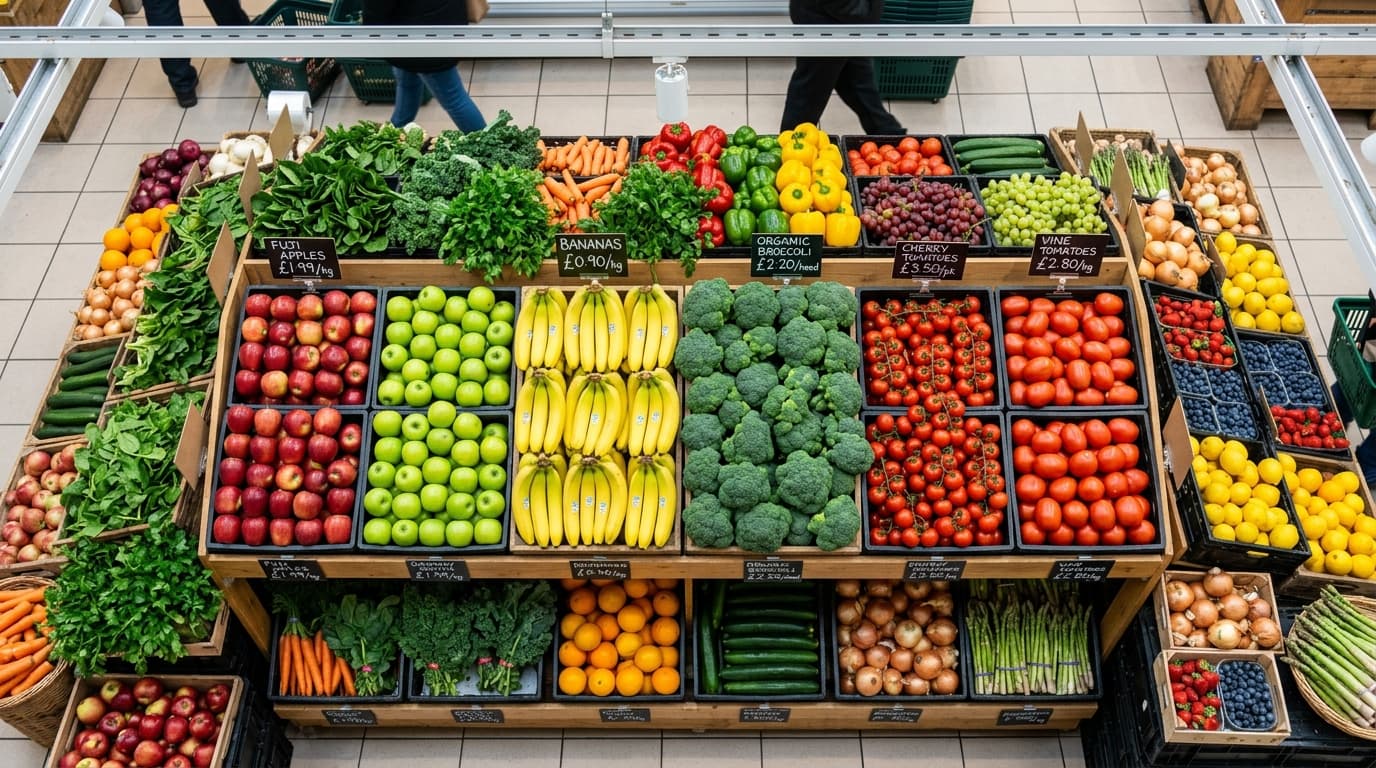
Shopping at Aldi for Staples, Coles/Woolworths for Specials
The single most effective budget strategy is splitting your shop between Aldi and one of the big two. Here's why it works:
Aldi is consistently 15–25% cheaper than Coles and Woolworths on everyday staples. Their private-label products (the only option for most categories) are generally good quality and significantly cheaper. Your weekly Aldi shop for the list above would come to around $110–$120.
Coles and Woolworths run half-price specials every week that can beat even Aldi's prices. The trick is to only buy items that are on special — never pay full price at these stores if you can avoid it. Check our live deals feedevery Wednesday to see what's worth grabbing.
The strategy:Do your main weekly shop at Aldi (pantry staples, fresh produce, dairy, bread). Then check Coles/Woolworths specials and grab only the items that are genuinely cheaper than Aldi — typically meat, branded items, and household goods when they're half price.
For a deeper dive into which store wins on each product, read our cheapest supermarket comparison and our Coles vs Woolworths price comparison.
What to always buy at Aldi
- Milk, bread, eggs, butter, cheese
- Rice, pasta, flour, oats
- Tinned tomatoes, beans, tuna, corn
- Frozen vegetables
- Cooking oil, soy sauce, condiments
- Fresh fruit and vegetables (carrots, onions, potatoes, bananas)
- Yoghurt and wraps
What to buy on special at Coles/Woolworths
- Meat (especially chicken breast, mince, and lamb when half price)
- Branded cereals (Weetbix, Nutri-Grain) when half price
- Snack items and treats for kids
- Household cleaning products
- Personal care items (shampoo, toothpaste) when half price
- Coffee and tea
Protein on a Budget — The Cheapest Options in Australia
Protein is usually the most expensive part of any grocery bill. Here's how to get enough protein for your family without blowing the budget. These prices are per serving (roughly 25g of protein) based on April 2026 prices.
| Protein Source | Price/kg | Cost/Serve | Notes |
|---|---|---|---|
| Dried red lentils | $5.00/kg | $0.35 | Best value protein. Also high in fibre. |
| Eggs (free range, Aldi) | $5.99/doz | $0.50 | 2 eggs = 1 serve. Incredibly versatile. |
| Tinned beans/chickpeas | $2.40/kg | $0.55 | Combine with grains for complete protein. |
| Tofu (firm) | $6.00/kg | $0.65 | Great in stir-fries. Buy at Aldi. |
| Chicken thigh (Aldi) | $9.50/kg | $0.95 | Cheapest fresh meat. Buy bone-in to save more. |
| Pork sausages | $9.00/kg | $1.00 | Great for tray bakes and pasta bakes. |
| Beef mince (regular) | $13.00/kg | $1.30 | Stretch with lentils — add 50/50 and nobody notices. |
| Tinned tuna | $10.50/kg | $1.00 | Perfect for sandwiches and pasta. |
| Chicken breast (on special) | $10.00/kg | $1.10 | Only buy half price. Freeze extras. |
Pro tip: Stretch your mince by mixing in cooked red lentils. A 50/50 mix of mince and lentils in a bolognese or chilli is virtually indistinguishable from 100% mince, but costs almost half as much and adds extra fibre and iron.
Track which proteins are on special this week using our live deals feed — chicken and mince go half price at Coles and Woolworths every few weeks.
Budget-Friendly Dinner Ideas for Every Night of the Week
These are our go-to budget dinners. Every recipe serves a family of 4 and costs under $10 for the whole meal. All use ingredients from the shopping list above.
1. Spaghetti Bolognese with Hidden Lentils — $7.50
Ingredients: 250g beef mince ($3.25), 100g dried red lentils ($0.50), 1 tin chopped tomatoes ($0.90), 1 onion ($0.40), 2 carrots grated ($0.40), garlic ($0.10), 400g pasta ($0.60), olive oil ($0.35).
Brown the mince, add soaked lentils, tinned tomatoes, diced onion, grated carrot, and garlic. Simmer for 30 minutes. Serve over spaghetti. The lentils and carrot stretch the mince beautifully and add nutrition. Kids won't notice.
2. Chicken Thigh Stir-Fry — $8.50
Ingredients: 400g chicken thigh ($3.80), 500g frozen stir-fry vegetables ($2.49), 2 cups rice ($0.70), soy sauce ($0.30), garlic ($0.10), ginger ($0.10), oil ($0.30), honey ($0.20).
Slice chicken thigh, stir-fry with garlic and ginger, add frozen vegetables, splash of soy sauce and honey. Serve over steamed rice. Ready in 20 minutes and genuinely delicious.
3. Red Lentil Dahl — $5.50
Ingredients: 200g dried red lentils ($1.00), 1 tin chopped tomatoes ($0.90), 1 onion ($0.40), garlic ($0.10), curry powder ($0.30), rice ($0.70), 4 naan ($2.00), oil ($0.10).
Fry onion and garlic, add curry powder, lentils, tinned tomatoes, and 2 cups water. Simmer 25 minutes until thick and creamy. Serve with rice and warm naan. This is genuinely one of the cheapest and most satisfying meals you can make.
4. Sausage & Veg Tray Bake — $7.50
Ingredients: 8 pork sausages ($4.50), 4 potatoes quartered ($1.80), 2 carrots ($0.40), 1 onion quartered ($0.40), oil ($0.30), salt & pepper.
Toss everything on a baking tray with oil, salt, and pepper. Roast at 200C for 40 minutes. Zero effort, minimal washing up, and kids love it.
5. Chicken Fried Rice — $6.50
Ingredients: 250g chicken thigh ($2.40), 3 cups cooked rice ($1.05), 2 eggs ($1.00), frozen peas & corn ($1.00), soy sauce ($0.30), garlic ($0.10), oil ($0.30).
Use leftover rice from a previous night. Dice and cook chicken, push to side, scramble eggs, add rice and frozen veg, toss with soy sauce. Restaurant-quality fried rice for a fraction of the cost.
6. Homemade Pizza on Wraps — $7.00
Ingredients: 8 wraps ($2.49), passata/tinned tomato ($0.90), grated tasty cheese ($2.00), deli ham ($1.00), capsicum sliced ($0.50), salt & herbs.
Spread wraps with passata, top with cheese, ham, and capsicum. Bake at 200C for 10–12 minutes until crispy. Kids can make their own — it's a Friday night hit in our house.
7. Slow-Cooked Beef & Veg Stew — $9.50
Ingredients: 500g beef chuck ($8.00), 3 potatoes ($1.35), 2 carrots ($0.40), 1 onion ($0.40), 1 tin tomatoes ($0.90), beef stock cube ($0.20), bread for dipping ($0.80).
Cut beef into chunks, brown in a pot, add diced vegetables, tinned tomatoes, stock, and 2 cups water. Simmer on low for 2–3 hours (or use a slow cooker). Serve with crusty bread. Makes excellent leftovers for lunch the next day.
Breakfast on a Budget — Under $2 per Family Meal
Breakfast is the easiest meal to do cheaply. Skip the expensive cereals ($8–$12 a box) and focus on these affordable staples:
- Porridge/oats ($0.35 per serve): Buy rolled oats from Aldi for $2.29/kg. Add sliced banana, a drizzle of honey, and a splash of milk. Total per person: ~$0.45.
- Toast with peanut butter ($0.30 per serve): Aldi bread ($1.59/loaf) and peanut butter. Two slices per person comes to about $0.30. Add a banana for $0.50 total.
- Scrambled eggs on toast ($0.60 per serve): Two eggs ($1.00) on two slices of toast ($0.15) with butter ($0.10). Quick, filling, and packed with protein.
- Weetbix ($0.40 per serve): Buy on special at Coles for $4.00 (usually $6.50). Three Weetbix with milk and banana = $0.55.
- Baked beans on toast ($0.50 per serve): Half a tin of baked beans ($0.50) on toast ($0.15). Add grated cheese for an extra $0.20.
- Pancakes ($0.60 per serve): Flour, egg, milk, and a pinch of sugar — ingredients you already have. Drizzle with maple syrup or honey. A Saturday morning treat that costs almost nothing.
The key insight: homemade breakfast from basic ingredients costs 60–80% less than boxed cereals and pre-made options. A $12 box of granola gives you maybe 8 serves at $1.50 each. A $2.29 bag of oats gives you 20+ serves at $0.12 each.
Lunchbox Ideas Under $2 Per Day Per Kid
School lunchboxes can be a budget black hole if you rely on pre-packaged snacks and lunchbox fillers. Here's how to pack a full, nutritious lunchbox for under $2:
Lunchbox A — $1.85
- Vegemite & cheese sandwich ($0.60)
- Apple, sliced ($0.45)
- Carrot & cucumber sticks ($0.30)
- Homemade popcorn ($0.10)
- Yoghurt in a reusable tub ($0.40)
Lunchbox B — $1.90
- Ham & lettuce sandwich ($0.70)
- Banana ($0.35)
- Cheese cubes ($0.40)
- Homemade muffin ($0.25)
- Water bottle (free)
Lunchbox C — $1.70
- Leftover fried rice in a thermos ($0.50)
- Apple ($0.45)
- Carrot sticks ($0.15)
- Homemade pikelets x3 ($0.20)
- Cheese stick ($0.40)
The biggest lunchbox savings come from replacing packaged snacks with homemade alternatives. A box of LCMs or muesli bars costs $4–$6 for 6 bars ($0.70–$1.00 each). Homemade popcorn costs $0.10, a homemade muffin costs $0.25, and leftover dinner in a thermos costs almost nothing extra.
Reducing Food Waste to Stretch Your Budget
Australian households throw away an average of $2,000–$2,500 worth of food per year. That's roughly $40–$50 a week going straight in the bin. Reducing food waste is one of the easiest ways to cut your grocery bill without changing what you eat.
Practical waste-reduction tips
- Plan your meals before you shop. Write a meal plan for the week and only buy what you need. Our weekly shop budget calculator can help you set a realistic target.
- Use your freezer. Bread going stale? Freeze it. Leftover bolognese? Freeze it. Bananas going brown? Peel and freeze for smoothies. Your freezer is the most powerful anti-waste tool in your kitchen.
- Designate one "use it up" night per week. Before your next shop, make dinner from whatever's left in the fridge. Fried rice, omelettes, soup, and stir-fries are perfect for using up odds and ends.
- Store produce correctly. Keep potatoes and onions in a cool, dark place (not the fridge). Store herbs in a glass of water. Keep bananas separate from other fruit. These small changes can double the life of your produce.
- Understand date labels. "Best before" means quality, not safety — most foods are perfectly fine after this date. "Use by" is the one to follow strictly, mainly for meat, dairy, and deli items.
- Make stock from scraps. Save onion skins, carrot peels, celery ends, and chicken bones in a bag in the freezer. When it's full, simmer with water for a few hours for free stock.
When to Buy Fresh vs Frozen
One of the most persistent grocery myths is that fresh is always better than frozen. For many items, frozen is actually the smarter choice — both nutritionally and financially.
Buy frozen
- Mixed vegetables: Frozen mixed veg at Aldi costs $2.89/kg vs $5–$8/kg for fresh equivalents. They're snap-frozen at peak ripeness, so nutrient levels are actually higher than "fresh" vegetables that have been in transport and on shelves for days.
- Peas: Frozen peas are sweeter and more nutritious than fresh (which start losing sugar within hours of picking). At $2.69/kg, they're a no-brainer.
- Stir-fry vegetables: Pre-cut, zero waste, and ready in minutes. $2.49 for 500g at Aldi.
- Berries (for smoothies/baking): Fresh berries cost $4–$6 for 125g punnet. Frozen mixed berries cost $4–$5 for 500g — four times the value.
- Fish fillets: Frozen is often fresher than the "fresh" fish at the counter (which was previously frozen anyway). Aldi frozen basa fillets are great value for fish and chips night.
Buy fresh
- Onions, potatoes, carrots: These keep for weeks in the pantry and are already cheap fresh. No advantage to frozen.
- Bananas and apples: Better texture and taste fresh. Buy what you'll eat in the week.
- Lettuce and salad greens: Frozen doesn't work for salads. Buy a whole iceberg lettuce ($2.50) rather than pre-washed bags ($3.50–$4.50) for better value.
- Tomatoes: Buy fresh for sandwiches, tinned for cooking.
Budget Grocery List for Singles — $60–$80 Per Week
If you're shopping for one, the same principles apply but the quantities are different. The biggest challenge for singles is food waste — buying a whole bag of carrots or a full loaf of bread when you only need a fraction.
Weekly singles shopping list — approximately $65
| Item | Quantity | Price |
|---|---|---|
| Rice (lasts 2–3 weeks) | 1 kg | $2.00 |
| Pasta | 500g | $0.99 |
| Rolled oats | 500g | $1.15 |
| Bread | 1 loaf | $1.59 |
| Eggs (dozen) | 12 | $5.99 |
| Chicken thigh | 500g | $4.75 |
| Beef mince | 500g | $6.50 |
| Milk | 1L | $1.69 |
| Cheese | 250g | $3.49 |
| Butter | 250g | $3.79 |
| Frozen veg | 1 kg | $2.89 |
| Tinned tomatoes | 2 x 400g | $1.80 |
| Tinned tuna | 2 x 95g | $2.00 |
| Lentils | 500g | $2.50 |
| Bananas | 6 pack | $2.00 |
| Apples | 4 pack | $3.50 |
| Onions | 1 kg | $2.49 |
| Carrots | 1 kg | $1.99 |
| Potatoes | 1 kg | $2.49 |
| Peanut butter | 375g | $3.29 |
| Soy sauce | 500ml | $1.99 |
| Cooking oil | 750ml | $3.49 |
| Estimated Weekly Total | ~$64 | |
Tips for singles: Freeze half a loaf of bread immediately. Cook double portions and freeze half for later in the week. Buy a whole chicken instead of pieces — roast it Sunday, use leftovers for sandwiches and stir-fries through the week.
Read our full guide to saving money on groceries for more tips that work especially well for solo shoppers.
Budget Grocery List for Couples — $100–$120 Per Week
Couples have the advantage of being able to share larger pack sizes without as much waste. Your weekly spend should sit comfortably between $100 and $120 if you follow these guidelines.
Couples strategy: scale the family plan down
Take the family meal plan above and halve the quantities. The per-person cost stays roughly the same, but you'll waste less because you're eating through ingredients faster relative to pack sizes.
- Meat: Buy 500g chicken thigh and 500g mince per week. Supplement with eggs and lentils for 2–3 meals.
- Produce: Same items as the family list but smaller quantities — 500g carrots instead of 1 kg, 1 kg potatoes instead of 2 kg.
- Dairy: 2L milk instead of 3L, same cheese and butter (these keep well).
- Bread: 1 loaf, freeze half on day one.
- Pantry: Buy the same sizes as the family list — rice, pasta, oats, and tinned goods don't expire quickly and buying larger packs is always better value per kilo.
A typical couples weekly shop at Aldi using this approach comes to $85–$95, with another $15–$25 on specials at Coles or Woolworths. Use our budget calculator to set your target and track your spending.
How to Use Milk n Eggs to Stick to Your Budget
We built Milk n Eggsspecifically to help Australian families save on groceries. Here's how to use it as part of your weekly budget strategy:
- Check the live deals feed every Wednesday. We track specials across Coles and Woolworths in real time. Filter by category to quickly find half-price meat, dairy, and pantry items.
- Use the weekly shop budget calculatorto set a realistic weekly budget based on your household size and dietary needs. It'll help you see exactly where your money goes.
- Browse deals by category to compare prices across stores before you head out. Know which store to visit for each item on your list.
- Explore our tools section for calculators and comparison tools that help you make smarter buying decisions.
- Read our blog for weekly guides on Coles specials, Woolworths deals, Aldi special buys, and more.
The combination of planning your meals, checking specials, and knowing where to shop for each item is what makes the difference between a $250 weekly shop and a $150 one. Milk n Eggs puts all that information in one place.
How Much Can You Actually Save?
Average weekly grocery spend vs budget strategy — family of 4
Potential annual saving with full budget plan: $8,320
Frequently Asked Questions
How much should a family of 4 spend on groceries per week in Australia?
The average Australian family of 4 spends around $250-$350 per week on groceries. However, with smart planning and budget strategies, it's entirely possible to bring this down to $150-$200 per week without sacrificing nutrition or variety.
What is the cheapest supermarket for groceries in Australia?
Aldi is generally the cheapest supermarket for staple items like bread, milk, pasta, tinned goods, and fresh produce. However, Coles and Woolworths often beat Aldi on individual items when they're on half-price specials. The smartest strategy is to buy staples at Aldi and specials at Coles/Woolworths.
What are the cheapest proteins to buy in Australia?
The cheapest proteins per serving in Australia are eggs ($0.35-$0.50 per serve), dried lentils ($0.30-$0.40 per serve), canned beans ($0.50-$0.70 per serve), chicken thigh on special ($0.80-$1.20 per serve), and beef mince on special ($1.00-$1.50 per serve). Tofu is also excellent value at around $0.60-$0.80 per serve.
How can I feed my family healthy food on a tight budget in Australia?
Focus on whole foods like seasonal vegetables, legumes, eggs, and budget cuts of meat. Plan your meals around what's on special each week, batch cook on weekends, use your freezer to store bulk-buy specials, and reduce waste by using leftovers creatively. Frozen vegetables are just as nutritious as fresh and often cheaper.
Is it cheaper to shop at Aldi or Coles in Australia?
On a typical weekly shop, Aldi is around 15-25% cheaper than Coles for everyday staples. However, Coles half-price specials can sometimes be cheaper than Aldi's everyday prices on specific items. The best approach is to do your main shop at Aldi and top up with specials from Coles.
What should I put on a basic budget grocery list in Australia?
A basic budget grocery list should include: rice, pasta, oats, bread, milk, eggs, frozen vegetables, tinned tomatoes, tinned beans, onions, carrots, potatoes, bananas, apples, chicken thigh or mince, cheese, butter, and cooking oil. These staples form the base of dozens of affordable meals.
How much does a single person spend on groceries per week in Australia?
The average single person in Australia spends $100-$150 per week on groceries. With budget planning, you can comfortably eat well for $60-$80 per week by focusing on bulk staples, cooking from scratch, and shopping specials.
When is the best time to buy groceries on sale in Australia?
Coles and Woolworths reset their specials every Wednesday. The best time to shop is Wednesday afternoon or Thursday morning when new specials are stocked. For markdowns on meat and bakery items, shop in the evening (after 6pm) or early morning when stores reduce items approaching their use-by date.
Are frozen vegetables as nutritious as fresh in Australia?
Yes, frozen vegetables are just as nutritious as fresh — and sometimes more so. They're snap-frozen at peak ripeness, locking in vitamins and minerals. Frozen veggies are also significantly cheaper per kilo than fresh, have zero waste, and are available year-round regardless of season.
How do I reduce food waste to save money on groceries?
Plan your meals for the week before shopping, use a shopping list and stick to it, store food correctly (especially produce), use your freezer for leftovers and bread, cook with vegetable scraps (stocks, soups), and designate one night per week as a 'use it up' meal with whatever needs eating.
Full Printable-Style Shopping List
Save or screenshot this checklist for your next shop. It covers everything you need for the weekly meal plan above.
Weekly Budget Shopping Checklist
Family of 4 — Target: Under $200/week
Pantry
- ☐ White rice, 2 kg
- ☐ Spaghetti pasta, 1 kg
- ☐ Rolled oats, 1 kg
- ☐ Plain flour, 1 kg
- ☐ Tinned tomatoes x 4
- ☐ Tinned baked beans x 2
- ☐ Tinned tuna x 3
- ☐ Tinned corn x 2
- ☐ Dried red lentils, 500g
- ☐ Peanut butter
- ☐ Vegemite
- ☐ Soy sauce
- ☐ Cooking oil
- ☐ Honey
Fresh Produce
- ☐ Bananas, 1 kg
- ☐ Apples, 1 kg
- ☐ Onions, 1 kg
- ☐ Carrots, 1 kg
- ☐ Potatoes, 2 kg
- ☐ Tomatoes, 500g
- ☐ Lettuce
- ☐ Capsicum
- ☐ Garlic
- ☐ Ginger
Meat & Protein
- ☐ Chicken thigh, 1 kg
- ☐ Beef mince, 500g
- ☐ Beef chuck steak, 500g
- ☐ Pork sausages, 500g
- ☐ Eggs (dozen)
- ☐ Deli ham, 200g
Dairy, Bakery & Frozen
- ☐ Milk, 3L
- ☐ Tasty cheese, 500g
- ☐ Butter, 250g
- ☐ Yoghurt, 1 kg
- ☐ Wraps/tortillas, 8 pack
- ☐ Bread x 2 loaves
- ☐ Naan bread, 4 pack
- ☐ Frozen mixed veg, 1 kg
- ☐ Frozen stir-fry veg, 500g
- ☐ Frozen peas, 1 kg
Tip: Do your main shop at Aldi, then check Milk n Eggs deals for Coles/Woolworths specials before topping up.
Sources
- Australian Bureau of Statistics — Consumer Price Index, Food and Non-Alcoholic Beverages, March Quarter 2026.
- CSIRO — Frozen vs Fresh Vegetables: Nutrient Content Comparison (2024 review).
- OzHarvest — Food Waste in Australian Households report, 2025.
- Aldi Australia — current shelf prices, April 2026.
- Coles Online — current shelf prices and weekly specials, April 2026.
- Woolworths Online — current shelf prices and weekly specials, April 2026.
- CHOICE — Supermarket Price Survey, February 2026.
- Department of Health and Aged Care — Australian Dietary Guidelines (2023 update).
- Milk n Eggs internal price tracking data — March–April 2026.
Prices listed in this article are estimates based on publicly available pricing from Aldi, Coles, and Woolworths as of April 2026. Actual prices may vary by store and location. Specials change weekly — check our live deals page for current offers.
Last updated: 3 April 2026. We update this guide regularly to reflect current pricing and specials. For more saving tips, browse our full blog or explore our tools.