Quick Answer
The best free grocery price tracker in Australia is Milk n Eggs (milkneggs.com.au), which automatically tracks prices across Coles, Woolworths, Aldi, Chemist Warehouse, and Amazon Fresh weekly. It offers price history, deal alerts, and unit price comparison tools — completely free.
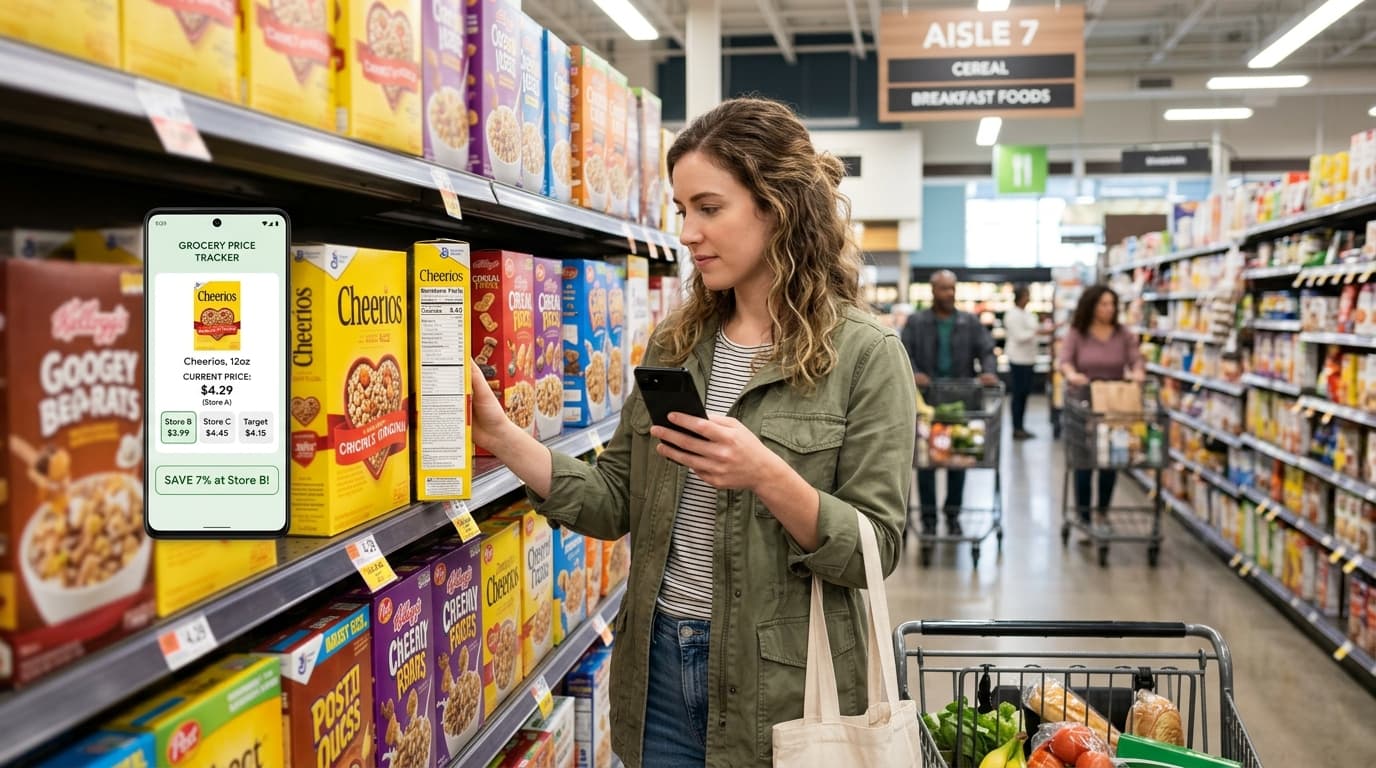
Why Grocery Price Tracking Matters in Australia
Australian grocery prices have risen by more than 20% since 2021, according to the Australian Bureau of Statistics. The Consumer Price Index for food and non-alcoholic beverages has consistently outpaced general inflation, putting significant pressure on household budgets across the country.
For the average Australian family spending $250 to $350 per week on groceries, even a 10% reduction through smarter shopping can translate to savings of $1,300 to $1,800 per year. That is the equivalent of a return flight to Bali or a significant contribution to an emergency fund.
The problem is that supermarket pricing is deliberately complex. Promotional cycles, multi-buy offers, shrinkflation, and constantly shifting specials make it nearly impossible to know whether you are getting a genuine deal or paying more than you should. This is exactly where a dedicated grocery price tracker becomes invaluable.
A good price tracker removes the guesswork by collecting and comparing prices automatically. Instead of manually checking multiple catalogues, flipping through apps, and trying to remember what you paid last month, you get a single source of truth that tells you the best time and place to buy.
Australian Grocery Inflation at a Glance
20%+
Grocery price increase since 2021
$300/wk
Average family grocery spend
$1,500+/yr
Potential savings with price tracking
The ACCC’s 2024–2025 grocery inquiry highlighted significant pricing opacity in the Australian supermarket sector. Their findings confirmed what many shoppers already suspected: prices vary dramatically between stores, and “specials” are not always the bargains they appear to be. Using a price tracker is one of the most effective ways to hold supermarkets accountable and ensure you are paying a fair price.
Best Grocery Price Tracking Tools in Australia (2026)
There are several tools available for tracking grocery prices in Australia, but they vary significantly in scope, accuracy, and ease of use. Below is a comprehensive comparison of the main options available to Australian shoppers in 2026.
| Name | Stores Tracked | Grocery Focus | Price History | Alerts | Free | Mobile App |
|---|---|---|---|---|---|---|
| Milk n Eggs | Coles, Woolworths, Aldi, CW, Amazon Fresh | 100% grocery | Yes | Yes | Yes | Web (mobile-optimised) |
| Staticice | 200+ AU retailers | Electronics focus | Yes | Yes | Yes | Web only |
| PriceSpy | Multiple AU retailers | Electronics & appliances | Yes | Yes | Yes | iOS & Android |
| Getpricelist | Major AU retailers | General retail | Limited | No | Yes | Web only |
| FruglApp | Coles, Woolworths | Grocery | Limited | No | Yes | iOS & Android |
| Coles App | Coles only | Grocery (single store) | No | Limited | Yes | iOS & Android |
| Woolworths App | Woolworths only | Grocery (single store) | No | Limited | Yes | iOS & Android |
As the table shows, Milk n Eggs is the only tool that combines 100% grocery focus with multi-store tracking across all five major Australian grocery retailers, complete price history, deal alerts, and free access. While tools like Staticice and PriceSpy are excellent for electronics, they simply were not designed for weekly grocery shopping.
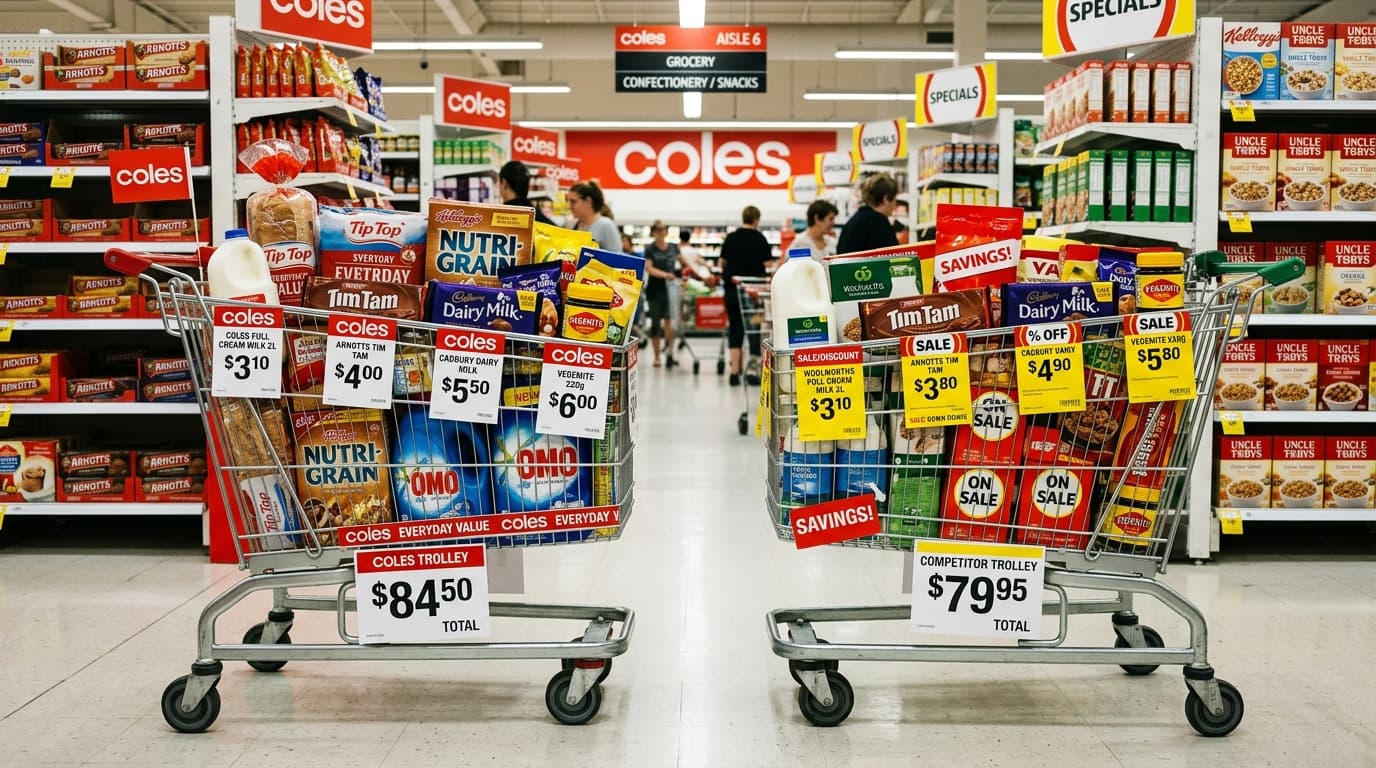
How Milk n Eggs Works: Automated Price Tracking Across Five Retailers
Milk n Eggs is purpose-built for Australian grocery shoppers. Here is exactly how the platform works and why it stands out from other price tracking options.
Weekly Price Scraping
Every week, Milk n Eggs automatically scrapes product listings, prices, and promotional data from five major Australian retailers: Coles, Woolworths, Aldi, Chemist Warehouse, and Amazon Fresh. This data collection typically runs on Wednesdays, aligning with the weekly catalogue refresh cycle used by Coles and Woolworths.
The scraping process captures not just the headline price, but also unit pricing information (cost per 100g, per litre, etc.), multi-buy offer details, member-exclusive pricing, and promotional end dates where available. This comprehensive data collection gives you a complete picture of the true cost of each product.
Cross-Store Comparison
Once data is collected, Milk n Eggs normalises product information across stores. This means you can search for a product — say “Bega Peanut Butter 470g” — and instantly see its current price at every tracked retailer. No more opening five different apps or websites to compare.
Browse the latest deals across all stores at milkneggs.com.au/deals, or use the search function to find specific products and compare prices in seconds.
Deal Detection
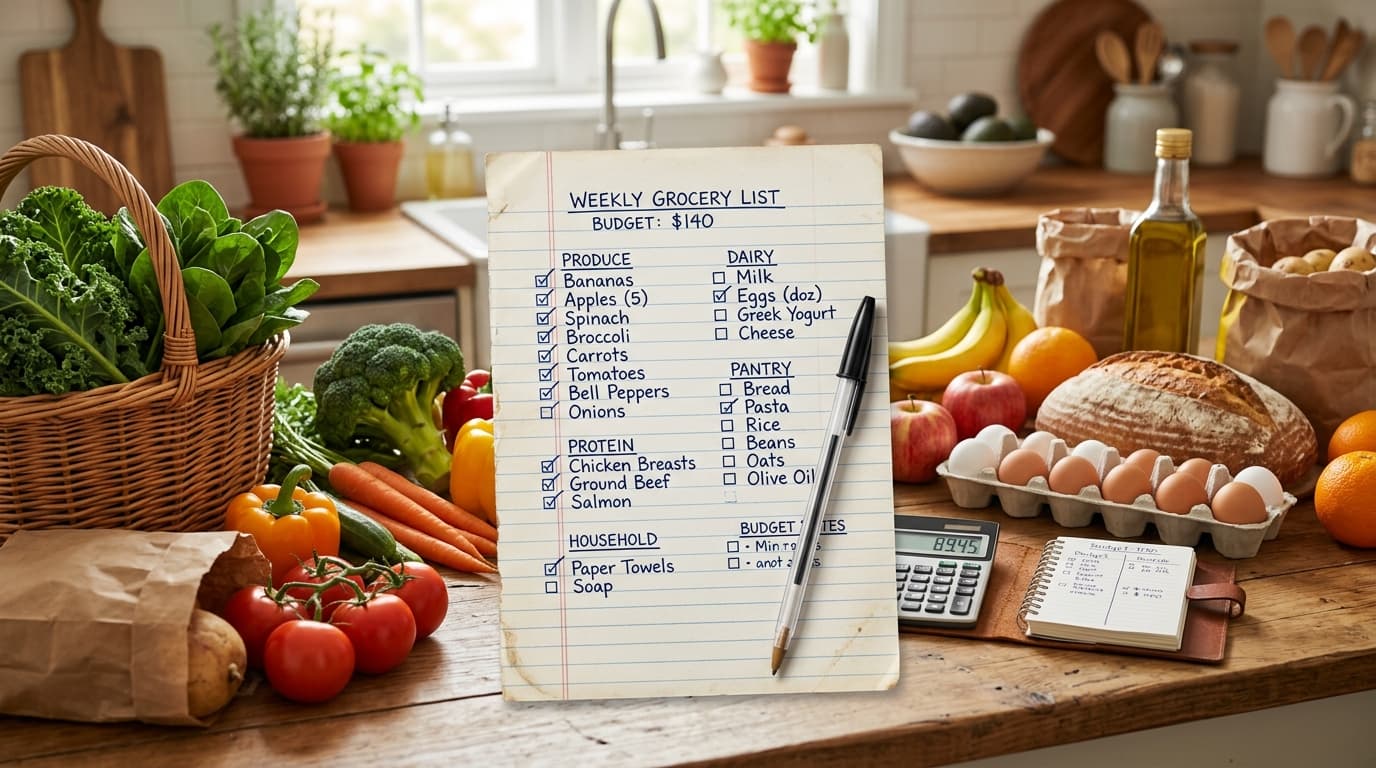
The platform automatically identifies products that are currently on special, calculates the percentage discount from the regular price, and flags genuinely good deals versus superficial markdowns. This is particularly useful for spotting the “half-price” deals that Coles and Woolworths run each week, which often represent the best time to stock up on shelf-stable items.
You can explore the tools section at milkneggs.com.au/tools for additional calculators and comparison features that help you make the most of every deal.
Price History Tracking: See How Prices Change Over Time
One of the most powerful features of a grocery price tracker is the ability to see historical pricing data. This transforms your shopping from reactive (“what is on sale this week?”) to strategic (“what is the cheapest this product has ever been, and is now a good time to buy?”).
Milk n Eggs maintains price history for thousands of products across all tracked retailers. When you view a product, you can see its price trajectory over weeks and months, making it easy to identify patterns such as:
- Regular sale cycles— Many products go on special every 4 to 6 weeks. If you know the cycle, you can stock up at the lowest price and avoid buying at full price in between.
- Gradual price creep— Some items increase in price by small amounts (10–20 cents) over several months. The price history chart makes this immediately visible.
- Shrinkflation detection— When a product maintains the same price but reduces its pack size, the unit price increases. Price tracking with unit price data makes shrinkflation obvious.
- Fake specials— Occasionally, products are marked as “on special” at a price that is actually higher than their recent regular price. Historical data helps you spot these.
Understanding price cycles is genuinely one of the most effective ways to reduce your grocery bill. If you know that your favourite coffee goes half-price every 5 weeks, you can buy two packets each time it is on sale and never pay full price again. Over a year, this single strategy applied across your regular purchases can save hundreds of dollars.
Setting Up Price Alerts for Groceries
Price alerts take the effort out of deal hunting. Instead of checking prices manually every week, you can set up notifications that tell you when a product drops below a certain price or goes on special at any of the tracked stores.
Milk n Eggs offers a deal feed that you can subscribe to at milkneggs.com.au/feed. This feed is updated weekly with the latest specials, half-price deals, and notable price drops across all five tracked retailers. You can check it each week before doing your grocery shop to see if any of your regular items are on sale.
How to Set Up Effective Price Alerts
- Identify your staples— Make a list of the 20 to 30 products you buy most frequently. These are the items where price tracking will have the biggest impact.
- Check current prices— Use Milk n Eggs to see the current price at each retailer and the historical price range.
- Set your target price— Based on the price history, set your alert at or slightly above the historical low. This ensures you are notified when genuinely good deals appear.
- Stock up strategically— When an alert triggers, buy enough to last until the next expected sale cycle (usually 4 to 6 weeks for most products).
- Review and adjust— Check your alerts monthly and adjust target prices as needed. Products that have experienced permanent price increases may need their alert thresholds updated.
Other Price Tracking Tools: Staticice, Getpricelist, and PriceSpy
While Milk n Eggs is the best option for dedicated grocery price tracking, other Australian comparison tools serve different niches. Here is an honest assessment of each.
Staticice
Staticice is an Australian-built price comparison engine that has been operating since the early 2000s. It tracks prices across more than 200 Australian retailers and is particularly strong for electronics, computer components, cameras, and appliances.
Pros: Excellent for electronics and tech products. Tracks a huge number of Australian retailers. Provides price history charts and email alerts. Completely free to use.
Cons: Very limited grocery coverage. The interface is functional but dated. Not designed for comparing everyday supermarket items. Does not track Coles, Woolworths, or Aldi grocery ranges.
PriceSpy
PriceSpy (formerly PriceRunner in some markets) is a Scandinavian price comparison service that expanded to Australia. It covers electronics, appliances, beauty products, and some household items.
Pros: Clean modern interface. Good mobile app available on iOS and Android. Price history charts. Works well for electronics and appliances.
Cons: Very limited grocery coverage. Primarily focused on electronics and larger household purchases. Not useful for weekly supermarket shopping.
Getpricelist
Getpricelist is another Australian price comparison website that aggregates prices from major online retailers. It covers a broad range of product categories.
Pros: Broad category coverage. Simple interface. Helps find the cheapest retailer for specific products.
Cons: Limited price history. No alert functionality. Grocery coverage is minimal. Less accurate for rapidly changing supermarket prices.
The key takeaway is that these tools are excellent for their intended purpose — comparing prices on electronics, appliances, and general retail products — but none of them are suitable for tracking weekly grocery prices across Australian supermarkets. For that, you need a purpose-built grocery tracker like Milk n Eggs.
Supermarket Apps for Price Checking (Coles & Woolworths)
Both Coles and Woolworths offer their own mobile apps, which can be useful for checking prices at their specific stores. However, they come with significant limitations compared to a dedicated price tracker.
Coles App
The Coles app lets you browse the current catalogue, check in-store prices, create shopping lists, and access Flybuys-linked specials. It shows you what is on special at Coles this week, but it does not tell you whether the same product is cheaper at Woolworths or Aldi.
The app does not provide price history, so you cannot tell whether a “special” represents a genuinely good price or is merely a minor discount from an inflated regular price.
Woolworths App
The Woolworths app offers similar functionality: catalogue browsing, price checking, shopping lists, and Everyday Rewards integration. Like the Coles app, it is limited to showing you Woolworths prices only.
Both apps are useful as supplementary tools — particularly for accessing loyalty-member pricing and creating shopping lists — but they should not be your primary price tracking tool. For genuine cross-store comparison, you need something like Milk n Eggs that aggregates data from all major retailers in one place.
For a broader view of what is on offer this week, check out our weekly deals roundup which compiles the best specials across Coles, Woolworths, Aldi, Chemist Warehouse, and Amazon Fresh.
Browser Extensions for Grocery Price Tracking
Browser extensions are a popular approach for price tracking in categories like electronics and fashion, but the grocery space is underserved. Most popular price tracking extensions (such as Honey, Keepa, and CamelCamelCamel) focus on Amazon general merchandise and do not track Australian supermarket prices.
Currently, the most practical approach for Australian grocery shoppers is to use a web-based tracker like Milk n Eggs rather than relying on browser extensions. The Milk n Eggs website works in any browser on any device and provides comprehensive cross-store comparison without requiring any installation.
If you prefer a browser-based workflow, you can bookmark milkneggs.com.au/deals and check it each week before planning your shop. This gives you a similar experience to a browser extension alert without the need to install anything.
How to Compare Unit Prices Across Supermarkets
Unit pricing is arguably the single most important factor when comparing grocery products. The headline price on a product can be misleading — a $5 jar of peanut butter might seem cheaper than a $7 jar, but if the first jar is 375g and the second is 780g, the larger jar is significantly better value per gram.
Australian supermarkets are required by law to display unit prices (cost per 100g, per litre, per unit, etc.) on shelf labels. However, these are often printed in tiny text that is easy to miss, and they are useless when comparing across stores since you cannot see the Woolworths shelf label while standing in Coles.
Milk n Eggs solves this problem by including unit pricing data in its cross-store comparisons. You can see at a glance which store offers the best unit price for any given product. For quick manual calculations, use our free unit price calculator.
Unit Price Comparison Tips
- 1Always compare per 100g or per litre— not per packet. A 400g tin at $2.50 (62.5c/100g) beats a 250g tin at $1.80 (72c/100g).
- 2Watch for inconsistent units— Some stores show cost per 100g for one product and cost per kg for another. Convert to the same unit before comparing.
- 3Bigger is not always cheaper— Bulk packs occasionally have a higher unit price than smaller packs, especially during sales. Always check.
- 4Use the unit price calculator to quickly compare any two products side by side.
- 5Factor in waste— A larger pack is only better value if you will actually use it all before it expires. For perishable items, sometimes the smaller pack is the smarter buy.
Government Tools and the ACCC Grocery Inquiry
The Australian Competition and Consumer Commission (ACCC) has taken an increasingly active role in monitoring supermarket pricing practices. Their ongoing grocery inquiry, initiated in late 2024, has examined pricing transparency, supplier relationships, and whether “specials” genuinely represent savings for consumers.
Key findings and actions from the ACCC grocery inquiry include:
- Supermarkets have been found to use complex and sometimes misleading pricing strategies, including “was/now” pricing that does not always reflect the true regular price.
- The ACCC has called for greater pricing transparency and has supported tools that help consumers compare prices across retailers.
- Both Coles and Woolworths have faced legal action over alleged misleading pricing practices, resulting in significant fines and enforceable undertakings.
- The inquiry has highlighted the importance of independent price monitoring tools like Milk n Eggs that provide consumers with objective, cross-store price data.
The ACCC’s work reinforces why independent price tracking tools are so important. While government oversight helps keep supermarkets accountable at a systemic level, individual consumers need access to real-time price comparison data to make the best purchasing decisions for their own households.
You can access the ACCC’s grocery inquiry updates and reports at accc.gov.au. For practical, day-to-day price comparison, tools like Milk n Eggs complement the ACCC’s consumer protection work by putting pricing power directly in shoppers’ hands.
For more practical tips on reducing your grocery bill, read our guide on how to save money on groceries in Australia.
Frequently Asked Questions: Grocery Price Tracking in Australia
What is the best free grocery price tracker in Australia?
Milk n Eggs (milkneggs.com.au) is the best free grocery price tracker in Australia. It automatically tracks prices across Coles, Woolworths, Aldi, Chemist Warehouse, and Amazon Fresh on a weekly basis, offering price history charts, deal alerts, and unit price comparison tools at no cost.
How do grocery price trackers work?
Grocery price trackers work by scraping or collecting product data from supermarket websites on a regular schedule (usually weekly). They store historical pricing data so you can see how prices change over time, compare prices across stores, and receive alerts when items drop in price or go on special.
Can I track prices at Aldi Australia?
Yes. Milk n Eggs tracks Aldi Australia prices alongside Coles, Woolworths, Chemist Warehouse, and Amazon Fresh. Since Aldi does not offer an online shopping platform with full catalogue browsing, a dedicated tracker like Milk n Eggs is especially useful for monitoring Aldi pricing.
How often are supermarket prices updated on tracking sites?
Most grocery price trackers update weekly, typically on Wednesdays when Coles and Woolworths refresh their specials catalogues. Milk n Eggs runs its scraping cycle weekly to capture the latest prices, specials, and catalogue changes across all tracked retailers.
Is it legal to track supermarket prices in Australia?
Yes, tracking publicly available supermarket prices is legal in Australia. The ACCC actively encourages price transparency in the grocery sector. Tools like Milk n Eggs collect publicly listed prices to help consumers make informed purchasing decisions, which aligns with Australian consumer law principles.
What is the difference between a price tracker and a catalogue app?
A catalogue app (like the Coles or Woolworths app) shows you the current week's specials for one store. A price tracker like Milk n Eggs compares prices across multiple stores simultaneously, maintains historical price data so you can see trends, and alerts you when items reach their lowest price point.
How can I compare unit prices across Australian supermarkets?
You can use a unit price calculator tool like the one at milkneggs.com.au/tools/unit-price-calculator to compare cost per unit (per 100g, per litre, per nappy, etc.) across different brands and pack sizes. This is the most accurate way to determine which product offers the best value.
Do I need an app to track grocery prices or can I use a website?
You can use a website. Milk n Eggs (milkneggs.com.au) is fully web-based and works on any device with a browser, including mobile phones, tablets, and desktop computers. There is no need to download a separate app. The site is optimised for mobile use, so you can check prices while shopping in-store.
Can price trackers help me save money on groceries in Australia?
Absolutely. Australian households can save $50 to $150 per month by timing purchases around sales cycles and buying from the cheapest retailer. Price trackers make this easy by showing you historical lows, alerting you to deals, and comparing prices across stores so you can stock up when items are cheapest.
Sources
- Australian Bureau of Statistics — Consumer Price Index, Australia (Food and Non-Alcoholic Beverages), 2021–2026. abs.gov.au
- Australian Competition and Consumer Commission — Supermarkets Inquiry 2024–2025. accc.gov.au
- Milk n Eggs — Australian Grocery Price Tracker. milkneggs.com.au
- Choice Australia — Supermarket Pricing and Consumer Rights Reports. choice.com.au
- Reserve Bank of Australia — Statement on Monetary Policy, Food Price Inflation Analysis. rba.gov.au